Homes in regions with fluctuating seasonal temperatures face a constant challenge in maintaining indoor comfort without driving energy costs too high. Traditional single-source heating systems often struggle to adapt efficiently to both mild and extreme weather conditions. This is where dual fuel heating systems offer a practical solution.
By combining two energy sources, typically a heat pump and a gas furnace, these systems automatically adjust based on outdoor temperatures. This flexibility allows homeowners to enjoy consistent warmth while managing energy use more effectively, making dual fuel systems an appealing option for households seeking balance.
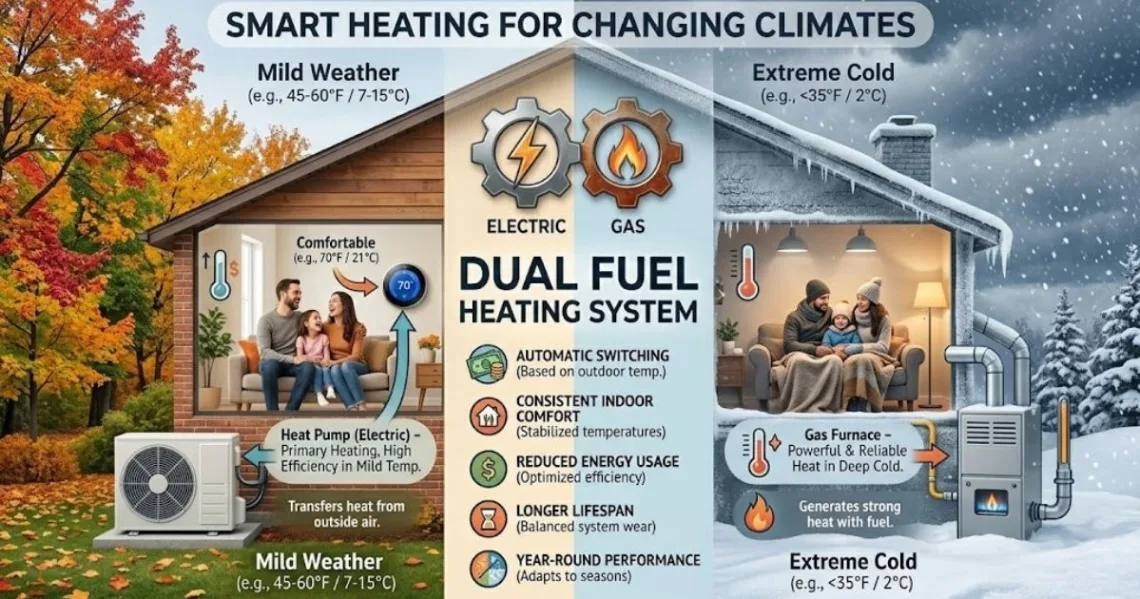
Smart Heating for Changing Climates
Understanding the Core Function of Dual Fuel Systems
Dual fuel heating systems operate by integrating an electric heat pump with a gas-powered furnace, creating a system that can switch between energy sources depending on outdoor conditions. During milder weather, the heat pump takes the lead because it transfers heat rather than generating it, making it more energy-efficient under moderate temperatures. When the temperature drops significantly, the system transitions to the furnace, which provides stronger and more reliable heat.
This automatic switching ensures that the system always operates in its most efficient mode. The seamless coordination between the two components allows homeowners to avoid over-reliance on a single energy source, reducing strain on equipment and improving overall performance across varying seasonal demands.
Energy Efficiency Across Temperature Extremes
One of the strongest advantages of dual fuel systems lies in their ability to optimize energy use throughout the year. Instead of relying on a furnace during all cold conditions, the system uses the heat pump when temperatures are not too low, which consumes less energy compared to burning fuel. This adaptability results in noticeable reductions in utility costs over time, especially in climates where temperatures fluctuate frequently rather than staying consistently cold.
In areas like Louisville, where seasonal shifts can be unpredictable, this type of system helps maintain efficiency without constant manual adjustments. The balance between electric and gas heating reduces unnecessary energy consumption and ensures that homeowners are not paying more than necessary to stay comfortable.
Enhanced Comfort and Consistent Indoor Temperatures
Maintaining a stable indoor temperature can be difficult when outdoor conditions change rapidly, but dual fuel systems address this issue effectively. Heat pumps provide steady, gradual heating in moderate weather, avoiding the sudden bursts of hot air that can occur with traditional furnaces. When colder conditions demand more power, the furnace takes over, ensuring that indoor spaces remain warm even during harsh weather.
This dual approach minimizes temperature swings inside the home, creating a more comfortable living environment. Additionally, the system’s automatic adjustment means homeowners do not need to constantly monitor or change settings, allowing for a more convenient and consistent heating experience.
Reduced Wear and Longer System Lifespan
Another important benefit of dual fuel systems is the reduced wear on individual components. Because the system alternates between the heat pump and the furnace, neither unit is forced to operate continuously under all conditions. This balanced usage helps prevent excessive strain, leading to fewer breakdowns and less frequent repairs over time.
By distributing the workload between two systems, homeowners can extend the lifespan of both the heat pump and the furnace. This not only improves reliability but also delays the need for costly replacements, making dual fuel systems a financially sensible choice in the long run.
Adaptability to Regional Climate Variability
Dual fuel systems are particularly valuable in regions where weather patterns are inconsistent or unpredictable. In such areas, temperatures can shift from mild to cold within a short period, making it difficult for a single heating system to operate efficiently at all times. The flexibility of a dual-fuel setup allows it to respond quickly to these changes, ensuring the home remains comfortable regardless of sudden weather shifts.
This adaptability is especially useful in transitional seasons like autumn and spring, when temperatures can vary widely throughout the day. By automatically selecting the most suitable heating method, the system maintains efficiency without requiring constant user intervention.
Environmental Considerations and Lower Emissions
As more homeowners become aware of their environmental impact, dual fuel systems offer a way to reduce carbon emissions without sacrificing comfort. Heat pumps rely on electricity and are generally more environmentally friendly than systems that burn fuel continuously. By using the heat pump whenever possible, the system reduces the overall reliance on fossil fuels.
When the furnace is needed, it operates only in colder conditions, thereby limiting emissions compared to traditional systems that rely entirely on gas. This combination supports a more sustainable approach to home heating while still providing the power needed during extreme weather.
Lower Utility Bill Volatility Throughout the Year
One often overlooked advantage of dual fuel heating systems is their ability to stabilize energy expenses across different seasons. Traditional systems that rely solely on electricity or gas can lead to sharp increases in utility bills when weather conditions suddenly change. Dual fuel systems, however, balance energy consumption by switching to the more cost-effective option at any given time.
This prevents dramatic spikes in monthly expenses, allowing homeowners to better predict and manage their energy budgets. Over time, this consistency can make a noticeable difference, especially in regions where temperatures fluctuate frequently and utility rates vary between energy sources.
Improved System Performance During Transitional Seasons
While many heating systems are designed primarily for extreme cold, dual fuel systems perform particularly well during transitional periods such as early spring and late autumn. During these times, temperatures often shift throughout the day, making it inefficient for a furnace to run continuously. A heat pump can handle these moderate conditions more effectively, delivering just the right amount of warmth without excessive energy use.
This smooth performance during the in-between seasons ensures that the home remains comfortable without overworking the system. It also reduces unnecessary cycling, which can contribute to wear and tear in conventional heating setups.
A Practical Choice for Year-Round Comfort
Dual-fuel heating systems provide a balanced and adaptable solution for homes facing changing seasonal temperatures. By combining the efficiency of a heat pump with the reliability of a gas furnace, these systems ensure consistent indoor comfort while reducing energy consumption and operational strain. Their ability to adjust automatically to outdoor conditions makes them a convenient and dependable option for homeowners seeking both performance and cost control.
Over time, the benefits of improved efficiency, reduced maintenance needs, and enhanced comfort make dual-fuel systems a worthwhile investment for maintaining a comfortable home environment year-round.
Read also: Dwayne Michael Turner: the absent father who shaped Lil Wayne