The efficiency of your home’s heating and cooling system plays a crucial role in its overall energy consumption. With rising energy costs, homeowners are increasingly seeking ways to reduce energy bills while maintaining a comfortable living environment. HVAC services are integral to achieving this goal. A well-maintained and properly installed HVAC system can significantly improve your home’s energy efficiency, ensuring that it operates effectively without wasting energy.
Whether it’s through regular maintenance, the installation of energy-efficient units, or optimizing your system’s performance, HVAC services can help lower your energy usage and reduce costs. Taking steps to improve your HVAC system’s efficiency can lead to long-term savings while contributing to a more sustainable household.
Understanding the Role of HVAC in Energy Efficiency
- The Impact of Regular Maintenance on Efficiency
One of the most effective ways to improve your home’s energy efficiency is through regular HVAC maintenance. Over time, dust, dirt, and debris can accumulate in your system, reducing its efficiency and making it work harder than necessary. This can lead to increased energy consumption and higher utility bills.
Regular maintenance, such as cleaning filters, lubricating moving parts, and checking refrigerant levels, helps your system run more efficiently, reducing the strain on components and improving airflow. An HVAC contractor will conduct a thorough inspection of your system to ensure that everything is functioning properly. By addressing minor issues before they become major problems, you can extend the lifespan of your HVAC system and avoid costly repairs. This proactive approach not only ensures optimal performance but also helps to maintain consistent comfort levels throughout your home.
- Choosing Energy-Efficient HVAC Systems
Upgrading to a more energy-efficient HVAC system is another effective way to reduce your home’s energy usage. Modern systems are designed to meet higher efficiency standards, providing the same level of comfort while using less energy.
Energy-efficient systems, such as those with higher SEER (Seasonal Energy Efficiency Ratio) ratings, use advanced technologies to minimize power consumption. When it’s time for a replacement or upgrade, an HVAC contractor can help you select a system that meets your home’s needs and delivers the highest energy efficiency. Whether you opt for a more efficient air conditioner, furnace, or heat pump, investing in a newer, more efficient system can result in long-term savings and a reduced carbon footprint.
- Insulation and Ductwork Improvements
In addition to optimizing your HVAC system, ensuring that your home’s insulation and ductwork are in good condition is essential for improving energy efficiency. Poor insulation or leaky ducts can cause significant energy loss, forcing your HVAC system to work harder to maintain the desired temperature. A properly insulated home will retain heat in the winter and stay cool in the summer, reducing the load on your HVAC system.
Similarly, leaking ducts can allow air to escape before reaching the intended rooms, leading to uneven temperatures and wasted energy. An HVAC contractor can evaluate your insulation and ductwork to identify areas that need improvement. Sealing leaks, adding insulation, or upgrading ductwork can significantly enhance your system’s efficiency, ensuring that the air you pay to heat or cool stays inside the house where it’s needed.
- Installing Programmable Thermostats
Another valuable tool for improving energy efficiency is installing a programmable thermostat. These devices allow you to set different temperatures for different times of day, ensuring that your HVAC system isn’t running unnecessarily when no one is home.
For example, you can program the thermostat to lower the temperature at night or when the house is empty, then raise it before you return home, providing comfort without wasting energy. Many modern thermostats are even Wi-Fi-enabled, allowing you to control the temperature remotely from your smartphone, tablet, or computer. By installing a programmable thermostat, you can better manage your system’s energy use and avoid overcooling or overheating your home.
- The Importance of Professional Installation
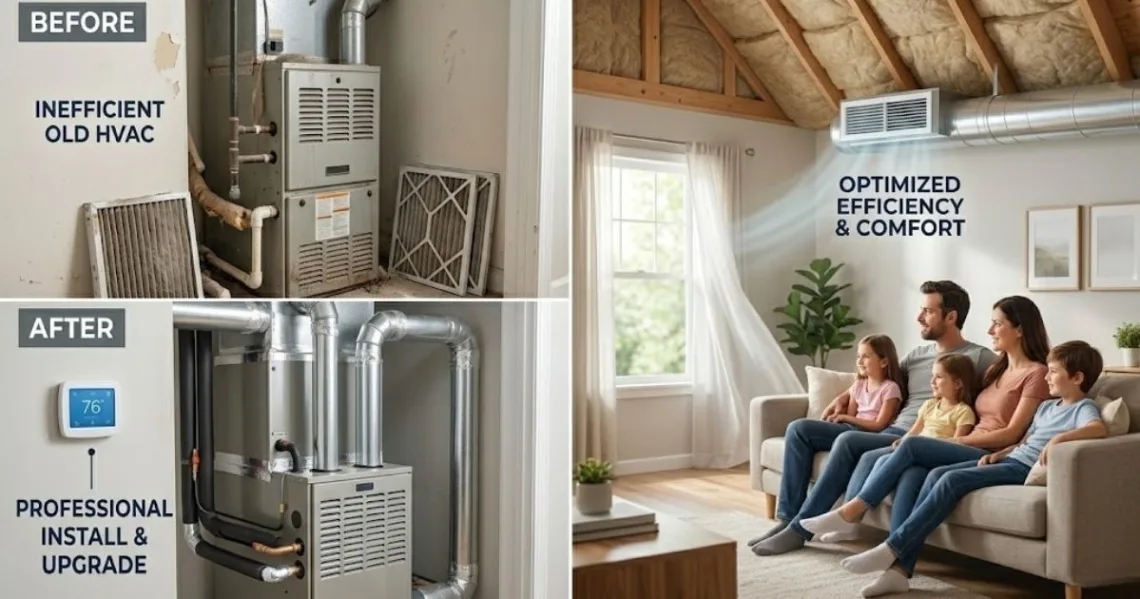
Proper installation is crucial to maximizing the energy efficiency of your HVAC system. Even the most energy-efficient system can underperform if it is not installed correctly. A professional HVAC contractor ensures that the system is installed according to manufacturer specifications and meets all local building codes.
This includes setting up the system in the most efficient location, ensuring that all connections are secure, and verifying that airflow is optimized. A poorly installed system can result in issues such as improper refrigerant levels, airflow problems, and energy waste. By hiring a professional to install your system, you ensure that it runs as efficiently as possible from day one.
Long-Term Benefits of HVAC Efficiency
In conclusion, investing in HVAC services to improve your home’s energy efficiency can lead to long-term savings and enhanced comfort. Whether through regular maintenance, upgrading to an energy-efficient system, improving insulation and ductwork, or installing a programmable thermostat, each step can help reduce energy consumption and lower utility bills.
A professional HVAC contractor plays a crucial role in ensuring that your system is optimized for efficiency and longevity. By taking the time to improve your HVAC system’s performance, you not only save money but also contribute to a more sustainable future. Efficient heating and cooling systems are a win-win for your budget, your comfort, and the environment.
Read also: How Residential HVAC Services Can Improve Home Comfort Year-Round