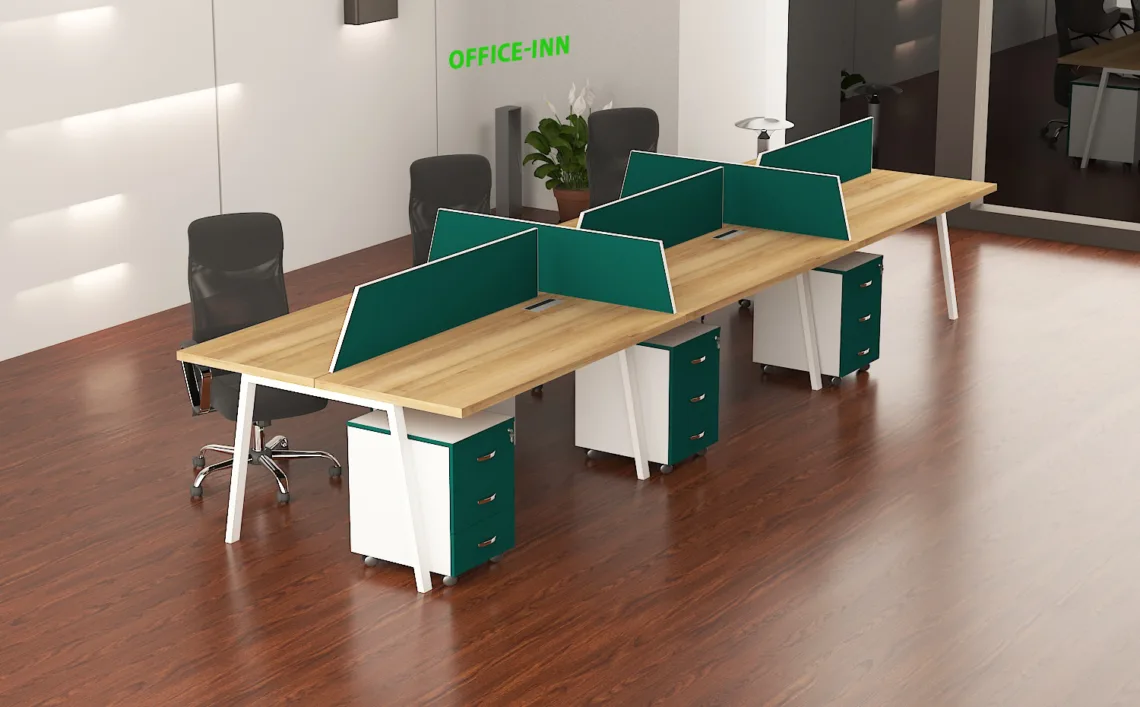
Modern offices are no longer fixed environments where furniture remains unchanged for years. Workplaces now adapt to shifting team sizes, hybrid schedules, and evolving workflows. Desk selection has become an important factor in shaping how people interact, focus, and collaborate throughout the day. Traditional office desks and modular office desk systems represent two different approaches to organizing work environments.
Each option influences movement, comfort, and the overall flow of an office. Understanding how these two styles differ helps organizations create environments that support both structure and adaptability while maintaining practical use of available space and resources.
Foundations of Modern Workspace Design
Traditional vs Modular Overview
Traditional office desks are typically designed as fixed units that remain in one position for long periods. Modular systems, on the other hand, are built for change, allowing configurations to shift in response to immediate needs. This contrast forms the foundation of how offices decide on furniture layouts today. While traditional designs often emphasize stability and uniform appearance, modular arrangements prioritize flexibility and movement within the workspace.
Many organizations that want to adapt quickly to hybrid schedules are now exploring office desk options that enable easier transitions between individual work and group collaboration. These choices are increasingly influenced by how teams function rather than simply how an office looks, making adaptability a central consideration in workspace planning.
Traditional Office Desk Structures
Traditional office desks are typically designed as fixed units that remain in one position for long periods. Modular systems, on the other hand, are built for change, allowing configurations to shift in response to immediate needs. This contrast forms the foundation of how offices decide on furniture layouts today. While traditional designs often emphasize stability and uniform appearance, modular arrangements prioritize flexibility and movement within the workspace.
Many organizations seeking to adapt quickly to hybrid schedules now explore office desk options that enable easier transitions between individual work and group collaboration. These choices are increasingly influenced by how teams function rather than simply how an office looks, making adaptability a central consideration in workspace planning.
Modular Desk Systems in Flexible Spaces
Modular desk systems are designed to respond to changing office needs, offering flexibility that supports dynamic workflows. These desks can be rearranged, expanded, or reduced depending on team size or project requirements. The ability to shift configurations allows offices to create collaborative zones one day and individual workstations the next without major disruption. Modular systems often include components that connect or separate easily, making transitions smoother and faster.
This adaptability supports environments where hybrid work is common and space utilization must remain efficient. Employees benefit from a workspace that can evolve alongside their tasks, helping maintain productivity without being constrained by fixed layouts. The modular approach reflects a broader shift toward fluid workplace design that prioritizes responsiveness over permanence.
Space Efficiency and Layout Considerations
Space efficiency plays a major role in deciding between traditional and modular desk systems. Traditional desks often require fixed spacing, which can limit how many workstations fit into a given area. This rigidity can lead to underused corners or inefficient layouts when office needs change. Modular systems, however, allow planners to adjust configurations in response to real-time requirements, making better use of available square footage. Work areas can be expanded during busy periods and condensed when fewer employees are present.
This flexibility supports offices that operate on hybrid schedules or shared seating arrangements. Layout decisions also influence movement within the space, as modular setups can create more open pathways and collaborative zones. The ability to reshape the environment helps maintain a balanced flow between private focus areas and shared workspaces.
Mobility and Reconfiguration in Workplaces
Mobility is one of the most significant differences between traditional and modular desk designs. Traditional desks are often heavy, fixed, and not intended to be moved frequently, which makes reconfiguration a slow process.
In contrast, modular desks are designed with movement in mind, allowing office layouts to shift with minimal effort. This mobility is particularly useful in environments where teams are frequently restructured or where project-based work is common. The ability to quickly rearrange furniture supports spontaneous collaboration and efficient use of space.
It also reduces downtime when offices need to adjust layouts for meetings, training sessions, or departmental changes. Flexible movement of furniture helps create a more responsive workplace where physical space aligns more closely with operational demands.
Cost and Long-Term Investment Factors
When comparing traditional and modular office desks, cost considerations extend beyond initial purchase prices. Traditional desks may have a lower upfront cost, especially when purchased in bulk for uniform office layouts. However, their lack of adaptability can lead to higher expenses over time if workplace changes require replacements or redesigns. Modular systems often require a larger initial investment due to their design and flexibility features. Despite this, they can reduce long-term costs by minimizing the need for frequent replacements or major renovations.
The ability to reconfigure existing furniture rather than purchase new units improves financial efficiency over time. Organizations must weigh immediate budget constraints against long-term adaptability needs when choosing between these two approaches to workspace furnishing.
Employee Comfort and Workflow Adaptation
Employee comfort is closely tied to how well office furniture supports daily workflows. Traditional desks offer consistency, which can help employees settle into predictable routines and maintain personal organization. This stability can be beneficial for tasks requiring concentration and minimal disruption. However, rigid layouts may not always support changing work styles or collaborative needs. Modular desks introduce a more adaptable environment where spaces can be adjusted to suit different tasks, whether focused work or group discussions.
This flexibility can improve workflow adaptation by allowing employees to choose environments that match their current responsibilities. Over time, this responsiveness can contribute to a more balanced and efficient work experience, as individuals are not confined to a single fixed setup.
Balancing Stability and Adaptability in Office Design
Choosing between traditional and modular office desks depends on how a workplace operates and how often it changes. Traditional desks offer consistency, structure, and familiarity, making them suitable for stable environments with predictable routines. Modular systems provide flexibility, allowing spaces to evolve alongside changing team needs and work styles. Both approaches contribute differently to productivity, comfort, and spatial efficiency.
The decision ultimately reflects how an organization balances stability with adaptability in its physical environment. As modern workplaces continue to shift toward hybrid and dynamic models, desk selection plays an increasingly important role in shaping how effectively people work together and use shared space.
Read also: Choosing the Right Heating and Cooling Contractor for Long-Term System Efficiency