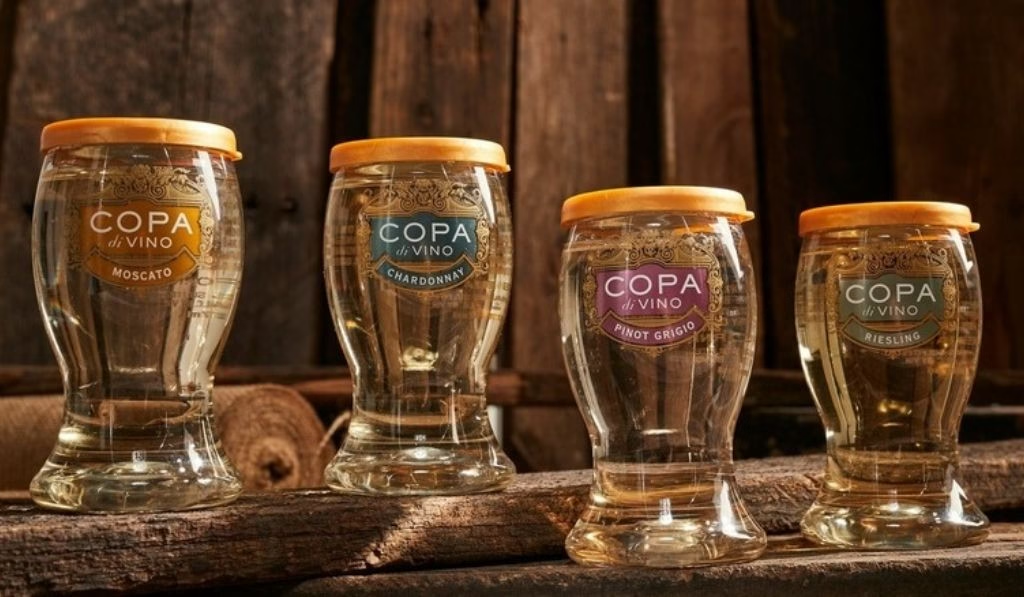
Copa Di Vino is now one of the success stories in the wine industry since it started out as a rejected proposal in the Shark Tank show and became a multi-million dollar single-serving wine business.
The brand net worth is estimated to be about $70 to 91 million in 2026, and this fact shows that in some cases, the best business choices can be to take a step back when it comes to investment offers.
Company Details
| Information | Details |
| Company Name | Copa Di Vino |
| Founder | James Martin |
| Founded | 2009 |
| Net Worth (2026) | $70 to 91 Million |
| Annual Revenue | $20 to 30 Million |
| Parent Company | Splash Beverage Group (acquired 2020) |
| Industry | Single-Serve Wine/Beverages |
| Headquarters | The Dalles, Oregon |
Shark Tank Story That Changed Everything
Copa Di Vino has a mark in the history of Shark Tank because it is the company that turned down the Sharks twice. James Martin got his first appearance on Season 2 in 2011 and wanted 5% equity for the amount of $300,000.
Kevin O’Leary proposed $600,000 with a 51 percent stake in the company. Martin left because he felt the deal was a low bid on his innovation.
Martin also came back in Season 3 a year later with spectacular figures. The sales had gone off the scale by increasing from $600,000 to $5 million within a span of 12 months only.
This time around there were several offers raised by the Sharks with a combined offer by Kevin O’Leary, Mark Cuban, and Robert Herjavec of $600,000 for 30 percent stake. Martin refused once again and decided to keep his business in full control.
His negotiating was tough, and the Sharks were frustrated. Mark Cuban challenged him on failing to be serious about making a deal. Robert Herjavec would even storm out of the set. Nonetheless, the move made by Martin turned out to be genius because Copa Di Vino became a powerful brand with no equity sacrificed.
The Story of How Copa Di Vino Made Its Fortune
Disruptive Innovation in the Wine Business
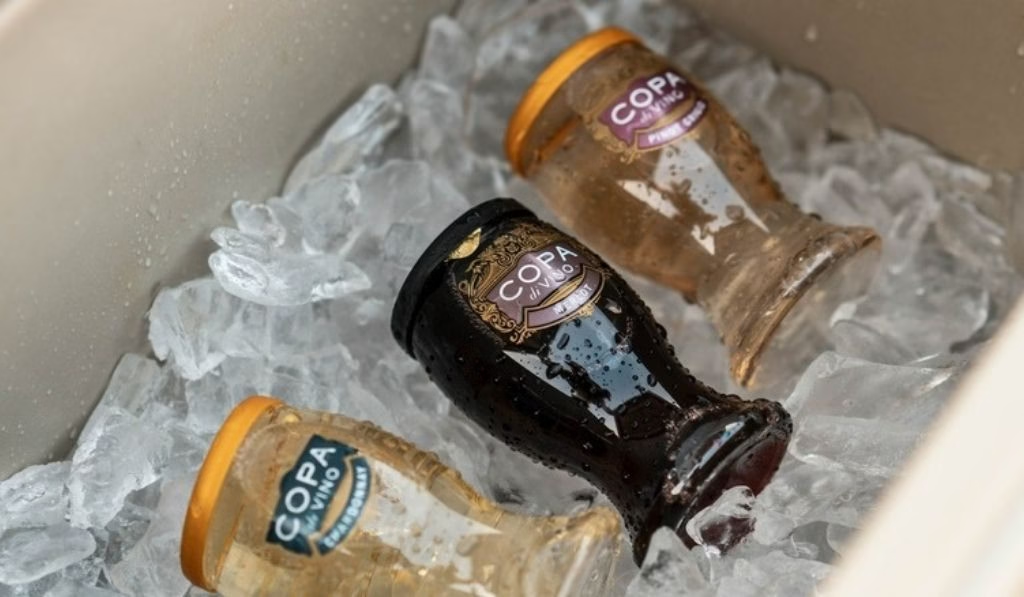
Copa Di Vino changed the way wine was consumed by introducing the single-serve containers that were patented. The product addresses several issues of the consumers:
Portion Control: Perfect single serving gets rid of waste.
Portability: No glass, corkscrew, or bottle required.
Freshness: Fresh wine can be preserved longer than a year using sealed technology.
Convenience: Ready to drink in any place at any time.
The shape of the container resembles a wine glass yet the splash-proof cover gives the consumers an opportunity to save it and use it later. This new system attracted millions of wine lovers who wanted convenience without quality sacrifices.
The Retail Distribution Strategy
The success of Copa Di Vino has been due to aggressive retailing. The brand has been placed in more than 13,000 retail outlets in the country including:
- Walmart (nationwide distribution)
- 7-Eleven convenience stores
- Kroger grocery chains
- Target stores
- Large hotel chains (Marriott, Hilton Garden Inn)
- Sports stadiums and concert halls
- Restaurants and golf courses
The Anheuser-Busch distribution network also intensified the reach of Copa Di Vino which is now available to the consumers in the entire 50 states. This large distribution made the brand not just a local winery, but a national one.
Product Variety and Customer Appeal
Copa Di Vino is a wine brand that offers eight high-end wine types that serve a wide range of tastes:
- Moscato
- White Zinfandel
- Pinot Grigio
- Merlot
- Chardonnay
- Cabernet Sauvignon
- Sauvignon Blanc
- Red Blend
Individual glasses are sold at $3.49 and the variety packs at $13.96 to $20.94. Low prices and quality made Copa Di Vino affordable luxury that is available to the ordinary consumers.
The Splash Beverage Group Purchase
Splash Beverage Group purchased Copa Di Vino in December 2020 for $5.98 million. The deal included:
- $2 million cash payment
- $2 million promissory note
- Stock worth up to $1.98 million based on future revenue targets
Before acquisition, Copa Di Vino was able to produce 2 million dollars of revenue per year. During the control of Splash Beverage Group, the annual sales increased almost threefold to about 6 million dollars by 2022 and 20.8 million dollars by 2025.
This growth rate values the brand at between 70 to 91 million by 2026, and with future forecasts, the figure may increase to 100 to 120 million in the near future.
James Martin continued to work after acquisition as the Founder and Chief Innovation Officer of Copa Di Vino and is reporting to the president of Splash Beverage Group. This would enable Martin to cash out and still provide his talent to the development of the brand.
Read more: Yinyleon Cause of Death: The Truth Behind Viral Rumors in 2026
James Martin: Copa Di Vino Revealed
From Oregon Farmer to Wine Entrepreneur
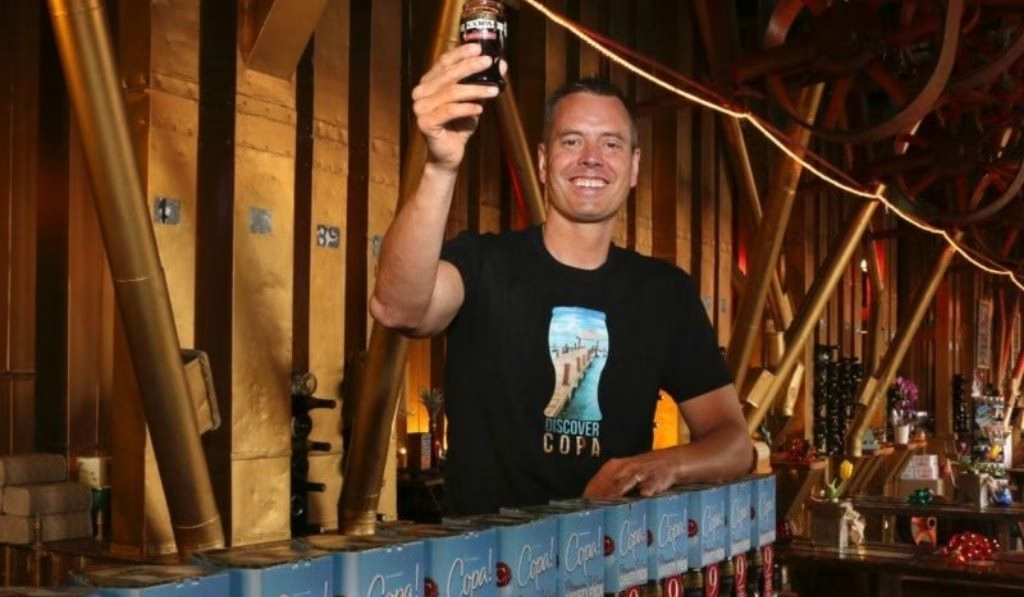
James Martin is a descendant of seven generations of Oregon farmers. He attended Linn-Benton Community College and Portland State University where he studied electrical engineering and mathematics respectively. In the year 2003, he joined Quenett beverage manufacturing firm as the head.
Copa Di Vino was the brainchild of the 2007 anniversary trip that Martin took with his wife Molli in southern France. They were offered wine in small capped glasses during a bullet train ride across wine country. This sparked the idea for Martin to introduce convenient high-quality wine to the consumers in America.
In 2005, Martin bought an unused flour mill in The Dalles, Oregon and converted it to Sunshine Mill Winery. He had two years to develop the patented single-serve technology with the assistance of his family before introducing Copa Di Vino in 2009.
James Martin Personal Net Worth
According to industry analysts, the personal net worth of James Martin in 2026 will be between 15 to 25 million. His fortune has been founded on:
- Ownership stake retained in the growth period of Copa Di Vino
- Proceeds from the acquisition of the Splash Beverage Group
- Further participation in other wine businesses
Another wine company that has been present in the LinkedIn profile of Martin since 2012 is Oregon Mountain Estate. The wine industry has seen him diversify and this is a testament to his interest in the industry other than Copa Di Vino.
Revenue Streams and Business Model
Copa Di Vino makes revenue in various ways:
Retail Sales: Major source of revenue by employing grocery shops, liquor shops, and convenience stores in the country.
E-Commerce: Direct sales through copadivino.com and such websites as Instacart.
Wholesale Distribution: Distribution to restaurants, hotels, bars, and entertainment centers.
Event Catering: This is a good option when it comes to festivals, concerts, and special events because of convenience.
Licensing and Technology: Proprietary packaging technology under license to other beverage companies.
Copa Di Vino has so far made more than 150 million cumulative revenues since its inception. Annual revenue estimates today are between $20 to 30 million with various sources and methods of calculations.
Market Position and Competitive Advantages
Copa Di Vino has a strong position in the single-serve wine market that includes a number of competitive strengths:
First-Mover Advantage: Leaders in the single-serve premium wine category in the United States.
Brand Recognition: Two appearances on Shark Tank generated enormous awareness with the consumer.
Distribution Network: Over 13,000 retail locations are available with coverage of the whole market.
Product Innovation: Innovative technology is patented and it acts as an entry barrier.
Quality Reputation: High-end wines appeal to consumers even with convenient packaging.
The market of single-serve drinks is still growing because people are focused on the convenience and the ability to regulate their portions. Copa Di Vino was in the right place to take advantage of these consumer trends.
Recent Developments and Future Outlook
Splash Beverage Group owns Copa Di Vino that keeps innovating and growing. Recent successes have been:
- Golden Ticket Award from Walmart on premium single-serve wine lineup
- Expansion to 115 Terrible Herbst convenience stores in Las Vegas
- Distribution alliance with Coastal Beverage Company in North Carolina
- Available in Travel Centers of America in 70 Loves around Texas
- Placement in Dodger Stadium and other sports stadiums
The brand has a good social media presence, communicating with the customers via Facebook, Instagram, and Twitter. Through marketing efforts there is a focus on convenience, quality, and lifestyle of the Copa Di Vino.
Valued at 100 to 120 million by industry analysts in the future, through:
- Continued retail expansion
- New products and variations of flavour
- Improved distribution contracts
- Increasing demand of single-serving drinks by consumers
- Green efforts and environmentally friendly packaging
Frequently Asked Questions About Copa Di Vino Net Worth
What will the net worth of Copa Di Vino be in 2026?
According to the present market analysis and performance in the form of revenue, Copa Di Vino is expected to have an estimated net worth of between 70 and 91 million dollars in the year 2026.
Did Copa Di Vino receive an offer on Shark Tank?
No, James Martin has been on Shark Tank twice and declined every offer.
Who owns Copa Di Vino now?
In December 2020, Splash Beverage Group bought Copa Di Vino at a price of $5.98 million. The brand operates under Splash which has a portfolio of beverage brands.
What is the worth of James Martin?
The personal net worth of James Martin is estimated to be between 15 to 25 million, which comes from his stake in Copa Di Vino and his ongoing wine business enterprises.
Where can I buy Copa Di Vino?
Copa Di Vino is available at Walmart, Target, 7-Eleven, Kroger, major liquor stores, hotels, restaurants, and online at copadivino.com.
What is the amount of revenue that Copa Di Vino brings?
It is projected that the annual revenue of Copa Di Vino will have reached 20 to 30 million in the year 2026 and the total sales will have exceeded 150 million since its inception.
Final Thoughts and Insights
The experience of Copa Di Vino is an example of how entrepreneurial vision and strategic implementation can make a marvelous success.
The controversial move by James Martin to turn down Shark Tank twice was a genius move as the company created value on its own.
The single-serve packaging of the brand met the real needs of the consumers and the quality of the wine was not compromised. Acquisition by Splash Beverage Group and strategic retailing alliances set Copa Di Vino with the power to grow further.
A convenience-oriented wine consumer who does not want to sacrifice on flavor will enjoy high-quality varietals in an environmentally-friendly pack at Copa Di Vino. The growth of the brand to thousands of retail stores makes quality wine available to the people in the country.
The history of the Copa Di Vino net worth from a startup to a multi-million dollar business shows that there are instances when all you need to do is to believe in your vision.
The story of Martin helps entrepreneurs to trust their instincts despite the possibility of being wrong according to conventional wisdom.