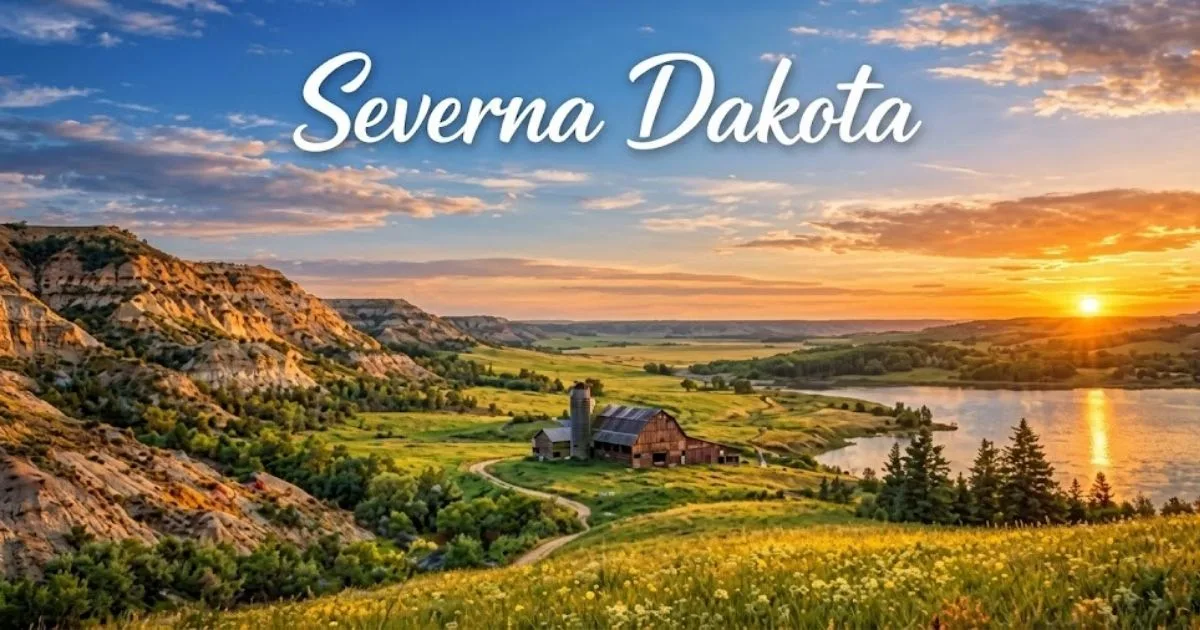
If you searched for Severna Dakota and landed here feeling confused, that is completely understandable. The name looks like a real place. It sounds like it could be a city, a region, or maybe even a country somewhere in Eastern Europe.
But the answer is actually much simpler. Severna Dakota is not a separate place at all. It is just another way of saying North Dakota, a real US state, translated into Slavic languages. This article explains where the name comes from, why it keeps showing up online, and everything worth knowing about the actual place it refers to.
What does Severna Dakota mean?
The name breaks down into two parts. “Severna” comes from Slavic languages such as Serbian, Croatian, and Slovenian, where it means “northern.” The word “Dakota” stays the same because it is a proper name rooted in Indigenous history and culture. Put the two together and you get a direct translation of North Dakota.
This is not unusual at all. The same thing happens with countless place names around the world. Germany is called “Deutschland” in German. Spain is “España” in Spanish. Japan is “Nihon” in Japanese. None of those are different countries. They are just the same places described in different languages. Severna Dakota works exactly the same way.
When you use Google Translate, visit a multilingual website, or read travel content originally written in a Slavic language, the name North Dakota automatically becomes Severna Dakota. That is why more and more people are seeing it online in 2026, especially as global platforms and multilingual tools have become part of everyday life.
Why is Severna Dakota trending online in 2026?
There are a few reasons this name keeps appearing in search results.
First, more people are consuming content from international sources. Travel blogs written in Croatian or Serbian, Wikipedia pages in Slovak, and European news sites all use Severna Dakota naturally. When those pages get indexed by Google and shared on social media, English-speaking readers encounter the name and search for it.
Second, translation tools are embedded everywhere now. Google Maps, travel apps, and browser extensions automatically translate content. When someone switches their browser to a Slavic language, every map label and article about North Dakota suddenly shows the translated version.
Third, content creators have picked up on the confusion. Because people are genuinely searching for it, articles and guides get written about it, which drives even more traffic, which creates even more curiosity. It becomes a self-reinforcing cycle.
The short version: Severna Dakota is trending because the internet is global, and language differences create confusion that curiosity then amplifies.
The word “Dakota” and its meaning
Before getting into geography, it is worth understanding what “Dakota” actually means. The word comes from the Dakota people, who are part of the larger Sioux Nation, one of the most significant Indigenous groups in North American history. The Dakota language translates the word as “friend” or “ally,” reflecting the values of community, trust, and unity that defined these peoples’ way of life.
When the territory that would become North Dakota and South Dakota was named in the 19th century, the name Dakota honored the people who had lived on that land for thousands of years before European settlers arrived. That history is still deeply present in the region today through reservations, cultural sites, language preservation efforts, and Native American museums and events across the state.
Where exactly is North Dakota (Severna Dakota)?
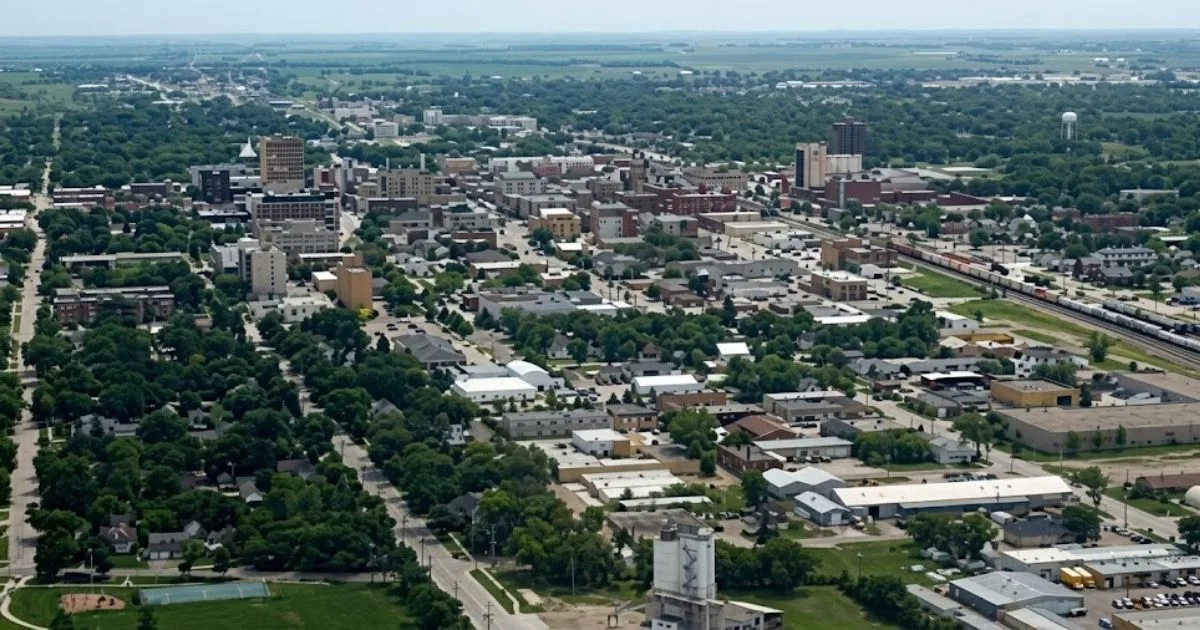
North Dakota is a state in the upper Midwest of the United States. It shares its northern border with the Canadian provinces of Saskatchewan and Manitoba. To the east is Minnesota, to the south is South Dakota, and to the west is Montana. It sits almost exactly in the geographic center of the North American continent.
The state covers around 70,698 square miles, making it the 19th largest in the US by area. Despite its size, the population is small. As of 2026, roughly 800,000 people live there, making it one of the least densely populated states in the country.
The capital city is Bismarck, which sits along the Missouri River. The largest city is Fargo, located in the eastern part of the state near the Minnesota border. Fargo is home to North Dakota State University and is the commercial and cultural hub of the region.
Geography and landscape
North Dakota’s landscape is one of the most varied and underappreciated in the entire country.
The eastern part of the state is defined by the Red River Valley, one of the flattest and most fertile plains on earth. This is prime agricultural land, and the soil here is some of the richest in North America, built up over thousands of years from the bed of ancient glacial Lake Agassiz.
Moving west, the landscape shifts into the Missouri Plateau, a region of rolling hills, river valleys, and open grasslands. This is where much of the state’s oil industry is concentrated, particularly in the Williston Basin.
The western edge of North Dakota is where things get dramatic. The Badlands, shaped over millions of years by wind and water erosion, create a landscape of jagged buttes, deep canyons, and multicolored rock formations that look almost alien. This is where Theodore Roosevelt National Park sits, one of the most visited and genuinely stunning natural areas in the American West.
Theodore Roosevelt National Park
Theodore Roosevelt National Park is the single most important attraction in North Dakota for visitors. It is named after the 26th President of the United States, who spent time in the Dakota Badlands during the 1880s and credited his experiences there as a turning point in his commitment to conservation. Years later, those convictions shaped some of the most significant environmental policies in American history.
The park is divided into three separate units. The South Unit near the town of Medora is the most accessible and most visited. The North Unit is more remote and quieter, favored by serious hikers and wildlife photographers. The Elkhorn Ranch Unit is the most isolated of all, preserving the site of Roosevelt’s actual cattle ranch.
Wildlife in the park is extraordinary. Bison herds roam freely throughout. Wild horses, which have been in the park for generations, move across the landscape in loose family groups. Prairie dogs, elk, mule deer, pronghorn, and bighorn sheep are all commonly spotted. The Painted Canyon overlook, just off Interstate 94 near the South Unit, delivers one of the most breathtaking views in the entire country at virtually no effort.
The park is genuinely one of the most underrated national parks in the US. It has a fraction of the crowds of Yellowstone or Zion while offering comparable wildlife encounters and scenery that rivals the best in the West.
Read also: Lisa Thorner: The Real Story Behind Damon Wayans’ Ex-Wife in 2026
Medora: the town worth visiting
Right at the gateway to Theodore Roosevelt National Park’s South Unit sits Medora, a small town with enormous character. It was founded in 1883 by a French nobleman, the Marquis de Mores, who built a packing plant and a chateau here during the cattle boom of the late 19th century. The Chateau de Mores still stands as a state historic site.
Today, Medora is the tourism heart of western North Dakota. The Medora Musical, an outdoor theatrical production set against the backdrop of the Badlands, runs every summer and has become one of the most popular live shows in the region. Rustic restaurants, Western-themed shops, and trail access to the park make it a natural base camp for exploring the area.
Despite everything it offers, Medora never feels overrun. That is part of its appeal. You get an Old West experience without the commercialism that has taken over similar destinations in more popular states.
Lake Sakakawea
Lake Sakakawea is one of the largest man-made reservoirs in the United States, formed by the Garrison Dam on the Missouri River. It stretches roughly 180 miles across central North Dakota and holds an enormous volume of water. The lake is named after Sacagawea, the Shoshone woman who accompanied the Lewis and Clark Expedition through the region in 1804 and 1805.
For outdoor recreation, the lake is exceptional. Fishing here is among the best in the Midwest, with walleye, northern pike, chinook salmon, and smallmouth bass all present in healthy populations. Boating, sailing, kayaking, and camping draw visitors from across the region every summer. The surrounding shoreline is largely undeveloped, giving the lake a wild and open character that feels rare in the modern United States.
Economy and industry
North Dakota’s economy has two major pillars: agriculture and energy.
Agriculture has been the foundation of the state since settlement. North Dakota leads the US in the production of several crops, including spring wheat, durum wheat, sunflowers, canola, and dry beans. More than 90% of the state’s land is farmland, the highest proportion of any state in the country.
Energy transformed the economy in the early 2000s. The Bakken Formation, a massive shale oil deposit beneath western North Dakota and parts of Montana and Canada, turned the state into one of the top oil-producing regions in the US. The oil boom brought rapid population growth, significant infrastructure investment, and substantially higher incomes to western communities.
North Dakota also has a unique distinction in American banking. It operates the Bank of North Dakota, the only state-owned bank in the country. Founded in 1919, the bank provides affordable loans to farmers, businesses, and students and has remained profitable for over 40 consecutive years.
Final thoughts
Severna Dakota is simply North Dakota with a Slavic translation attached to it. The confusion is real but the answer is simple. What is not simple, and what surprises almost everyone who actually visits, is the state itself. It is vast, quiet, and full of things that most travelers walk past on their way to somewhere else. Theodore Roosevelt National Park alone is worth a dedicated trip.
The Badlands at sunset are something you remember for years. The history, the Indigenous culture, the open roads, the night skies with almost no light pollution, it is a place that rewards the curious traveler more than almost anywhere else in the American interior.
Frequently asked questions
Is Severna Dakota a real place?
Severna Dakota is not a separate or officially recognized location. It is the Slavic-language translation of North Dakota, a US state. “Severna” means “northern” in languages like Serbian, Croatian, and Slovenian, while “Dakota” remains the same as it is a proper historical name.
Why do people search for Severna Dakota online?
People encounter the name on multilingual websites, translation tools, and international travel blogs written in Slavic languages. When those pages appear in search results or get shared online, English speakers see an unfamiliar name and search for it out of curiosity.
Where is North Dakota located in the US?
North Dakota is in the upper Midwest, bordering Canada to the north, Minnesota to the east, South Dakota to the south, and Montana to the west. Its capital is Bismarck and its largest city is Fargo.
What is North Dakota most famous for?
North Dakota is best known for Theodore Roosevelt National Park, the Badlands, Lake Sakakawea, the Bakken oil fields, and being one of the top agricultural states in the country. It consistently ranks among the most peaceful and least crowded states in the US.
What does the word Dakota mean?
Dakota comes from the language of the Dakota people, part of the Sioux Nation. It translates roughly as “friend” or “ally,” reflecting the values of community and trust central to Dakota culture. The name was used when the territory was formally organized in the 19th century to honor the Indigenous peoples of the region.
Read also: Marguerite Whitley: Who Is O.J. Simpson’s First Wife? Biography, Net Worth & Life in 2026