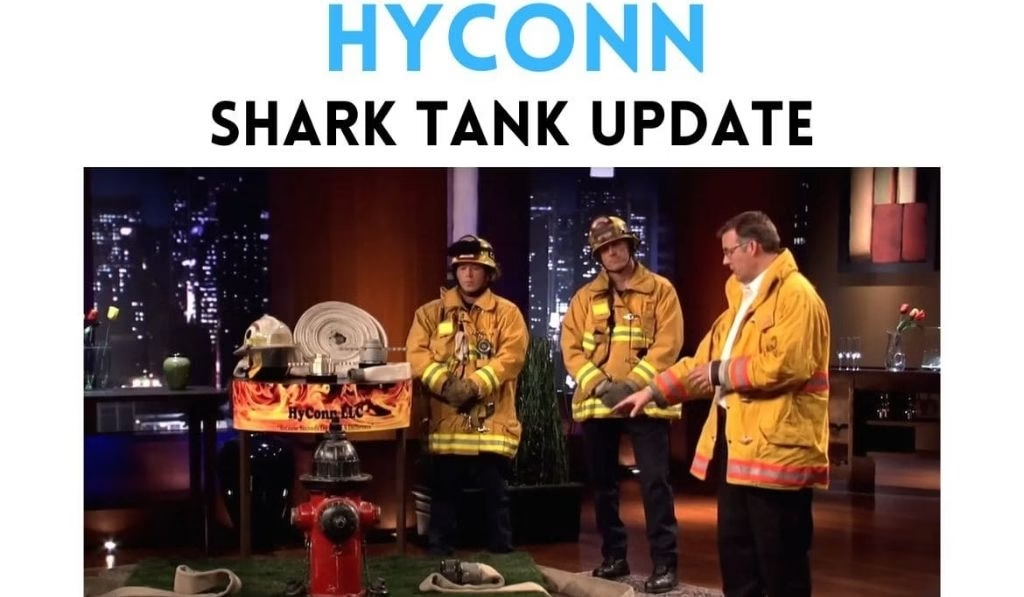
HyConn is a fast-connected fire hose connector created by Jeff Stroope, a firefighter from Arkansas. It became widely known when it was featured on Shark Tank Season 2 in 2011 and received a staggering offer of $1.25 million from Mark Cuban.
HyConn is estimated to be worth $5 million in 2026, however, the journey of this company has not been very smooth. From a failed deal to a quiet return, here are all the details you need to know about HyConn today.
Quick Facts: HyConn and Jeff Stroope
| Detail | Information |
| Company Name | HyConn LLC |
| Founder | Jeff Stroope |
| Founded | 1999 |
| Headquarters | Arkansas, USA |
| Profession (Founder) | Inventor and Fire Captain |
| Shark Tank Season | Season 2 (Aired May 20, 2011) |
| Ask on Shark Tank | $500,000 for 40% equity |
| Deal Made | $1.25 million for 100% (Mark Cuban) |
| Deal Closed? | No, fell apart after the show |
| HyConn Net Worth 2026 | ~$5 million (estimated) |
| Current Status | Low activity, website still active |
| Jeff Stroope Current Job | Tool and Die Shop Manager, D&M Holding Company |
What Is HyConn?
HyConn is a quick-connect fitting designed for fire hydrants and garden hoses. Traditional hose connections can take 30 seconds or more. HyConn brings that down to under 3 seconds.
Jeff Stroope spent more than 11 years developing and perfecting the product. He started in 1999 and eventually secured hard purchase orders from four fire departments. The device works across three main areas, including fire hydrant hose connections, homeowner garden hose adapters, and hose couplings for the oil and gas industry.
Every second counts in a fire emergency, and that is exactly what HyConn targets. The quick-connect technology is not just convenient, it is potentially life-saving. That is what made the Sharks pay attention.
HyConn on Shark Tank: The $1.25 Million Moment
Jeff Stroope walked onto the Shark Tank stage in a firefighter uniform, accompanied by two other firefighters, and asked for $500,000 in exchange for 40% equity, putting his company’s value at $1.25 million.
He demonstrated HyConn live, comparing the traditional method with HyConn side by side. The difference was obvious, and the Sharks were impressed right away.
What Happened in the Tank?
| Shark | Offer / Decision |
| Mark Cuban | Offered $1.25M for 100% of the company, a 3-year employment contract at $100K/year, and a 7.5% royalty in perpetuity |
| Kevin O’Leary | Offered $500K for 100% of the garden hose connector only, with a 5% royalty in perpetuity |
| Robert Herjavec | Went out, felt the 7.5% royalty was too generous |
| Other Sharks | Dropped out during negotiations |
Jeff accepted Mark Cuban’s offer on air, and it became one of the most dramatic deals in early Shark Tank history. What came next, though, is where the real story begins.
Why Did the Mark Cuban Deal Fall Apart?
After the show, Cuban and Stroope could not agree on how the company should be run. According to Jeff, Cuban wanted to pursue a licensing deal with another manufacturer, which would have pushed Stroope out of the production process of his own invention.
Jeff had no interest in being sidelined from a business he had built from the ground up. He walked away from the deal and later attributed the breakdown to Cuban’s approach, in a Facebook post.
It is a lesson many entrepreneurs learn after Shark Tank. The deal you see on television and the deal you actually sign are often two very different things.
HyConn Net Worth 2026: Where Does the Company Stand?
HyConn’s net worth is estimated at $5 million in 2026. This figure is based on the company’s patents, physical assets, brand recognition within the firefighting industry, and speculative goodwill, rather than current revenue alone.
Timeline After Shark Tank
| Year | What Happened |
| 2011 | Shark Tank episode airs, Mark Cuban deal collapses after the show |
| 2012–2018 | 101 Ventures and Innovate Arkansas provide funding, small but steady growth |
| 2019 | HyConn’s online presence goes quiet, many assume the company has closed |
| February 2024 | Jeff Stroope posts on Facebook that HyConn is back in production |
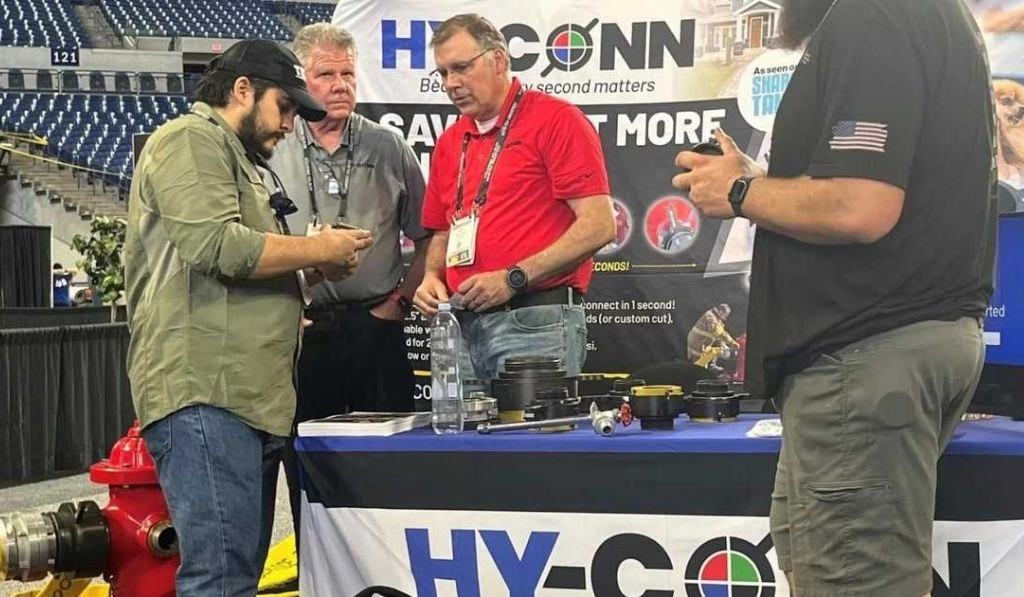
| 2024 | HyConn returns to the Fire Department Instructors Conference (FDIC) |
| 2025–2026 | Website is active, wholesale orders are being accepted, company runs at low scale |
By 2026, HyConn’s website is live and the product is available for wholesale. Retail activity remains limited and social media presence is minimal. Jeff Stroope is currently working as a Tool and Die Shop Manager at D&M Holding Company, so HyConn does not appear to be his primary focus at the moment.
Read more: Wedding Anniversary Wishes for Sister: 100+ Heartfelt, Funny & Touching Messages
HyConn Financial Overview
| Financial Metric | Estimated Figure |
| Shark Tank Valuation (2011) | $1.25 million |
| Cuban’s Offer | $1.25 million (100% buyout) |
| Peak Annual Revenue | ~$500,000 |
| Gross Profit Margins (Peak) | ~40% |
| Estimated Net Worth (2026) | $5 million |
| Funding After Shark Tank | 101 Ventures + Innovate Arkansas |
What Justifies a $5 Million Valuation?
It is a fair question to ask how a company with limited retail activity could still be valued at $5 million. The answer comes down to a few key factors.
HyConn holds patents on its quick-connect technology, and those patents are real, market-valued intellectual property. Beyond that, fire departments across the United States continue to need faster connection technology, so the demand is genuine and ongoing.
The Shark Tank appearance also gave HyConn lasting brand recognition in the firefighting and emergency services space. The company still sells to distributors and fire departments through wholesale, keeping some revenue flowing. And the product design itself is scalable, meaning the right manufacturing partner could revive it into something much larger.
Jeff Stroope: The Man Behind HyConn
Jeff Stroope is not a typical entrepreneur. He is a former Arkansas fire captain who served more than 15 years in the fire service before becoming an inventor. His frustration with slow hose connections was not theoretical, he lived it every time he responded to a fire.
Before HyConn, Jeff had a varied career. He worked as a commercial diver, Director of Engineering at an IT company, and a supervisor at Remington Arms Company. That background gave him a unique mix of real-world experience and technical expertise.
Today, Jeff balances his responsibilities at D&M Holding Company while staying connected to HyConn. He still believes in the product. His 2024 Facebook update, announcing a return to production, confirms that he has not given up on the invention he started back in 1999.
HyConn vs. Traditional Fire Hose Connectors
| Feature | HyConn | Traditional Connector |
| Connection Time | Under 3 seconds | Up to 30 seconds |
| Ease of Use | Push-and-click mechanism | Manual threading required |
| Training Required | Minimal | Standard fire department training |
| Applications | Fire, garden, oil and gas | Primarily fire and industrial |
| Availability | Wholesale only (2026) | Widely available |
Lessons From the HyConn Story

The HyConn story offers practical lessons for entrepreneurs, investors, and innovators. It is not just a Shark Tank tale, it is a real example of how things can go sideways even when they start well.
Never count on a deal until it is signed. The Cuban deal fell apart because both sides had different visions. Strategic alignment matters before anything else. A great product also means nothing without the ability to scale production affordably and reliably. And a Shark Tank appearance is not the finish line.
On-air deals can fail, but companies can still survive and even grow. Patents are real assets, HyConn’s intellectual property held its value even through the years when the company was barely operating. And founder conviction matters. Jeff’s belief in HyConn is what brought it back in 2024 when it was on the edge of being forgotten.
Final Thoughts: HyConn in 2026
The HyConn story is one of the more interesting ones to come out of Shark Tank. It is not a clean failure, and it is not a runaway success either. It sits somewhere in between, a genuinely useful product held back by manufacturing challenges, a broken investor relationship, and limited resources.
The $5 million net worth estimate reflects what HyConn could be, not just what it currently is. With the right partner and manufacturing support, this product could still find its way into fire departments across America.
For now, HyConn remains a small but active company, still committed to the mission Jeff Stroope started in 1999: saving lives by saving seconds.
Frequently Asked Questions
What is HyConn’s net worth in 2026? HyConn is estimated to be worth around $5 million in 2026, based on its patents, intellectual property, brand recognition, and market potential rather than current revenue alone.
Did Mark Cuban ever close the deal with HyConn? No. Although Mark Cuban made an offer of $1.25 million for 100% of HyConn on Shark Tank Season 2, the deal fell apart after the show. Jeff Stroope and Cuban disagreed on the direction of the company, particularly around manufacturing and licensing.
Is HyConn still in business in 2026? Yes, HyConn is still operating. The website is active and wholesale orders are available, though retail activity is limited and the company runs at a smaller scale than during its Shark Tank peak.
Who founded HyConn? HyConn was founded by Jeff Stroope, a former Arkansas fire captain. He invented the quick-connect adapter in 1999 after growing frustrated with the slow process of connecting hoses to hydrants.
What happened to Jeff Stroope after Shark Tank? Jeff Stroope continued working in engineering and manufacturing. As of 2025 to 2026, he is a Tool and Die Shop Manager at D&M Holding Company. He remains involved with HyConn and announced in 2024 that the company was ramping up production again.
How does HyConn work? HyConn uses a push-and-click quick-connect mechanism to attach fire hoses to hydrants in under 3 seconds. Standard connectors require manual threading and can take 30 seconds or longer, which makes a significant difference during an actual fire.
What was HyConn’s valuation on Shark Tank? Jeff Stroope entered Shark Tank asking for $500,000 for 40% equity, which valued HyConn at $1.25 million. Mark Cuban offered to buy 100% of the company for that same amount, along with a 3-year employment contract and a 7.5% royalty on future sales.