Asbestos kills more than 5,000 people every year in Britain alone, according to the Health and Safety Executive’s 2025 statistics. Most of those deaths trace back to exposure that happened decades ago. The real danger today is that millions of buildings still carry the same hidden risk, and the people inside them often have no idea. In May 2026, a smarter approach called asbestlint is changing how professionals find, assess, and manage that risk before it becomes fatal.
Asbestlint is not a single product. It is a structured methodology that combines intelligent inspection logic, continuous monitoring, and data-driven risk assessment to detect asbestos hazards early. This article explains exactly what asbestlint is, how it works, who needs it, and why it beats every traditional inspection method on the market today. Whether you manage a school, a factory, an office block, or an old home, this guide gives you everything you need to understand this approach.
What Is Asbestlint and Why Does It Matter in 2026?
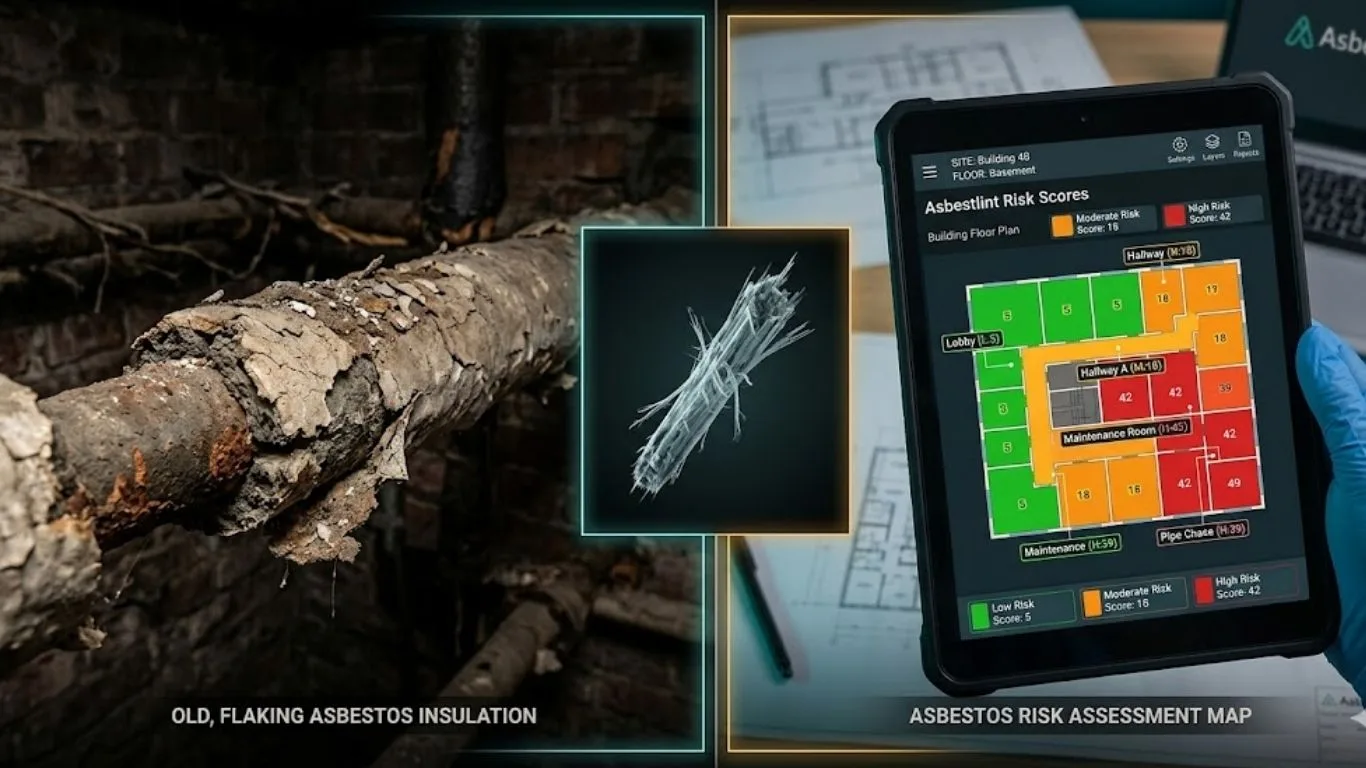
Asbestlint refers to both a hazard and a detection framework. At its most basic level, the term describes fine, fibrous dust released from asbestos-containing materials (ACMs) when those materials degrade or get disturbed. The particles resemble lint in texture but carry microscopic asbestos fibers that, once inhaled, lodge permanently in lung tissue.
The disease these fibers cause does not show up for 20 to 50 years after exposure. That long delay is exactly why detection and prevention matter so much. By the time symptoms appear, the damage is already done.
The Scale of the Problem Right Now
The UK Health and Safety Executive published its asbestos-related disease statistics in 2025, and the numbers are hard to ignore. Around 5,000 people die every year from asbestos-related diseases, including mesothelioma, lung cancer, and asbestosis. In 2023, there were 2,218 mesothelioma deaths alone.
The problem is not confined to old industrial sites. Research cited by the British Occupational Hygiene Society (BOHS) in February 2026 found that asbestos remains in over 83% of state-funded schools in England. Around 24,000 school buildings are beyond their original design life, and most still contain ACMs in varying conditions.
Why “Managed in Place” Is No Longer Enough
The standard approach for decades has been to leave asbestos in place if it is undisturbed and in good condition. That logic is failing. A 2023 Health and Safety Executive schools inspection programme found one in three schools in material breach of the Control of Asbestos at Work Regulations 2012. One in every 15 inspected schools received an enforcement notice.
Asbestlint addresses this gap by shifting from reactive management to proactive, intelligent detection.
How Asbestlint Works: The Detection Framework Explained
Asbestlint is a structured methodology, not a single gadget or app. It layers several analytical processes on top of each other to build a complete, continuously updated picture of asbestos risk inside any structure.
Step One: Intelligent Building Profile Analysis
The process starts before anyone enters the building. Asbestlint uses building age, construction type, material profiles, maintenance records, and renovation history to map likely asbestos locations. A warehouse built in 1965 carries a very different risk profile from a 1990s office block. Asbestlint treats those differences as data points.
Step Two: Risk Scoring by Zone
Once the building profile is established, asbestlint assigns risk scores to specific zones. Areas near pipe lagging, sprayed ceilings, boiler rooms, partition walls, and floor tiles from the pre-1999 era receive higher scores. Factors like humidity levels, vibration from nearby equipment, and recent maintenance activity all feed into the score.
What Indicators Does Asbestlint Watch For?
The framework tracks four key degradation indicators that traditional inspections often miss:
- Material surface changes like flaking, crumbling, or water damage
- Changes in airflow patterns near suspect materials
- Vibration exposure from HVAC systems, machinery, or foot traffic
- Humidity spikes that accelerate fibre release from porous ACMs
Step Three: Continuous Monitoring and Score Updates
Traditional inspections take a one-time snapshot. Asbestlint keeps watching. As building conditions change, the risk scores update. A section of pipe insulation that looked stable six months ago may now show degradation that pushes it into a high-risk category. Asbestlint catches that shift before any fibre release happens.
Asbestlint vs. Traditional Asbestos Inspections: A Direct Comparison
Most people still rely on the old approach: hire a surveyor, take physical samples, send them to a lab, and wait two days for results. That method has serious weaknesses.
| Feature | Traditional Inspection | Asbestlint |
| Risk identification | After visible damage | Before damage occurs |
| Frequency | Periodic snapshots | Continuous monitoring |
| Data analysis | Manual and subjective | Structured, standardised logic |
| Lab testing use | Broad and expensive | Targeted and cost-efficient |
| Traceability | Limited documentation | Full audit trail |
| Response speed | Days to weeks | Real-time alerts |
| Cost over time | High reactive costs | Lower proactive investment |
The difference is not just about speed. It is about catching the right problems at the right time. Asbestlint narrows the search zone so that when lab testing is needed, it focuses on genuinely high-risk areas instead of guessing.
What Asbestlint Means for Regulatory Compliance
If you manage a non-domestic building in the UK, compliance with the Control of Asbestos Regulations 2012 is not optional. Duty holders, typically landlords, employers, or local authorities, must identify ACMs, assess their condition, and maintain an up-to-date management plan.
Asbestlint aligns naturally with these legal requirements because every step it takes creates a documented, traceable record. Regulators and auditors want to see evidence of proactive management, not just a survey that happened three years ago. Asbestlint produces exactly that kind of evidence automatically.
Jonathan Grant, Registrar of the Faculty of Asbestos Assessment and Management (FAAM), stated in February 2026 that managing asbestos requires specialist knowledge, detailed risk assessment, and constant vigilance. Asbestlint builds that vigilance into the management system itself.
The CAR 2012 Duty to Manage and How Asbestlint Supports It
The Duty to Manage under Regulation 4 of CAR 2012 requires duty holders to assess the condition of ACMs regularly and take action when risk levels change. Asbestlint does not just help you meet this requirement once. It maintains ongoing compliance by tracking condition changes and updating risk assessments automatically. This is the difference between a compliance document and a living compliance system.
Read more: Meredith Schwarz Explained: The Private Life and Remarkable Career of Pete Hegseth’s First Wife
Asbestlint in Renovation and Demolition Projects
Renovation and demolition carry the highest risk of sudden asbestos fiber release. A plasterer drilling into an old partition wall or a plumber cutting through insulated pipework can release thousands of fibers in seconds. Workers and nearby occupants breathe those fibers without knowing it.
Asbestlint changes the pre-project workflow completely. By running a full asbestlint risk assessment before any physical work starts, project managers can identify exactly which areas need specialised handling, protective isolation, or professional removal. This prevents the two outcomes that ruin construction projects: surprise asbestos discoveries mid-build and emergency shutdown orders from the HSE.
Think about a refurbishment team hired to modernise a 1970s school hall in Birmingham. Without asbestlint, they might start work on the suspended ceiling without knowing the tiles contain asbestos insulating board (AIB). Three days into the job, an HSE inspector shuts the site down. The delay costs tens of thousands of pounds and exposes every worker on site to a serious health risk. With asbestlint in place before the first drill turns on, that entire scenario never happens.
How Asbestlint Protects Workers and Building Occupants
Workplace safety in 2026 goes far beyond hard hats and safety boots. The invisible hazards kill more people than the visible ones. According to the British Safety Council’s October 2025 report, asbestos accounts for roughly 5,000 occupational deaths per year compared to just 138 work-related fatalities from physical accidents.
Asbestlint protects workers by identifying risk zones before people enter them. Safety officers get clear, documented risk maps they can brief teams on before any maintenance, cleaning, or construction activity begins. That means workers know exactly where not to drill, scrape, or cut without specialist protection.
Secondary Exposure: The Risk Nobody Talks About
One of the most underreported dangers in asbestos management is secondary exposure. This happens when workers carry fibers home on their clothing or hair, exposing family members who never set foot in the building. Children and partners of construction workers and maintenance staff are among the most vulnerable groups.
Asbestlint reduces secondary exposure risk by ensuring workers know precisely which areas have active fiber risk and can take decontamination steps accordingly. Better knowledge leads to better practice, and better practice protects everyone, including people who never go near the building.
The One Mistake 90% of Facility Managers Make With Asbestos in 2026
Most facility managers believe that if their asbestos survey is up to date and their asbestos register exists, they are compliant and protected. That belief is dangerous.
A survey is a static document. It captures the condition of ACMs at one moment in time. It says nothing about what has happened to those materials in the 18 months since the surveyor walked the building. It does not account for the maintenance team that accidentally scuffed a ceiling tile in February. It does not capture the damp patch that developed in the plant room over winter.
Asbestlint’s core principle is continuous reassessment. The risks that kill people are not the ones that appeared on last year’s survey. They are the ones who developed quietly in the gap between inspections. The 2023 HSE schools inspection found that one in seven inspected schools had issues serious enough for enforcement action. Those schools all had asbestos management plans on file. The plans existed. They just were not living, updated, or responsive to change.
The fix is not more paperwork. The fix is a monitoring framework that catches changes as they happen, which is exactly what asbestlint is designed to do.
What Is Asbestlint? Direct Answer for Quick Reference
Asbestlint is an intelligent methodology for asbestos risk detection and management. It combines building profile analysis, continuous condition monitoring, structured risk scoring, and documented assessment logic to identify asbestos hazards early. It is not a replacement for laboratory testing but a system that makes testing more targeted and effective. It is used by safety officers, facility managers, surveyors, and compliance professionals managing older buildings.
Who Should Use Asbestlint? A Clear Answer
Asbestlint is relevant for anyone responsible for a building constructed before 1999 in the UK. This includes property owners, facility managers, school estate managers, NHS trust premises teams, housing associations, construction contractors, and safety compliance officers. It is particularly critical for those planning renovation or demolition work in older structures, where the risk of disturbing hidden ACMs is highest. Homeowners renovating older properties should also seek asbestlint assessment before any invasive work begins.
The Future of Asbestlint: Digital Integration and AI-Powered Detection
In May 2026, the next wave of asbestlint development is already underway. Organisations like Start Software, which has delivered over 500,000 asbestos reports through its Alpha Tracker platform for building managers across the UK, Australia, and New Zealand, are pushing toward fully digital asbestos management ecosystems.
The direction is clear: integrate asbestlint logic with digital building records, sensor networks, and predictive analytics. Companies like Greenwall have already developed on-site asbestos analysers using near-infrared spectroscopy and AI software that can return a material analysis result in under 10 seconds. That kind of technology, combined with asbestlint’s risk framework, creates a system where high-risk zones are flagged automatically and tested with precision rather than guesswork.
What Predictive Analytics Adds to Asbestlint
Predictive analytics takes the continuous monitoring data that asbestlint collects and runs it through models that forecast future risk. If the humidity in a plant room has been rising for three months and the pipe lagging in that room already carries a risk score of 6 out of 10, the system can predict when that score is likely to cross a critical threshold. Safety teams then act weeks before the problem becomes dangerous rather than hours after it does.
The Mesothelioma UK Research Centre, based at Sheffield University, has been central to building the evidence base that shows just how serious the ongoing asbestos risk in public buildings remains. Their research, published in 2024, documented that mesothelioma deaths among education professionals are significantly underestimated by standard government statistics, reinforcing the need for more rigorous, continuous detection systems like asbestlint.
Real-World Benefits of Adopting Asbestlint for Organisations
Organizations that implement asbestlint gain more than better safety outcomes. The financial case is strong too.
Unplanned asbestos discovery mid-project is one of the most expensive events a construction firm or building owner can face. Site shutdown, specialist removal, legal notification, and business interruption can easily run to six figures. Asbestlint’s proactive identification of risk zones eliminates most of those surprises.
From a reputation standpoint, clients, tenants, employees, and regulators increasingly expect transparent, documented safety management. An organization that can show a living asbestlint assessment framework is demonstrating a commitment that goes well beyond minimum legal compliance. That matters when schools are awarding maintenance contracts, when NHS trusts are tendering for building services, and when corporate landlords are negotiating long leases.
Asbestlint Checklist: Key Steps for Property Managers
Use this as a starting point when implementing asbestlint in any building built before 1999:
- Confirm the building’s construction date and obtain any existing asbestos register
- Commission a full asbestlint building profile analysis covering all materials, floors, and zones
- Assign initial risk scores to each identified area based on material type, condition, and activity levels
- Set up a continuous monitoring schedule covering humidity, vibration, airflow, and visual degradation
- Train all maintenance, cleaning, and facilities staff on which zones carry active risk and what protocols to follow
- Schedule targeted laboratory testing for any zone that crosses the defined risk threshold
- Update the asbestos management plan whenever a condition change is recorded
- Maintain a full audit trail of every assessment, alert, and action taken
Frequently Asked Questions About Asbestlint
What exactly is asbestlint?
Asbestlint refers to two connected things. First, it describes the fine, fibrous dust made of microscopic asbestos fibers released when asbestos-containing materials degrade or are disturbed. Second, it refers to an intelligent risk detection methodology that uses structured analysis, continuous monitoring, and data-driven logic to identify and manage asbestos hazards before they cause harm.
Is asbestlint dangerous?
Yes. The microscopic asbestos fibers in asbestlint are permanently damaging once inhaled. They lodge in lung tissue and cannot be expelled by the body. Over time, they cause inflammation, scarring, and cancers including mesothelioma and asbestosis. The UK Health and Safety Executive confirmed in 2025 that there is no known safe level of asbestos exposure.
How is asbestlint different from a standard asbestos survey?
A standard survey is a one-time inspection that captures a snapshot of ACM condition on the day it is conducted. Asbestlint is a continuous, dynamic system that monitors condition changes over time, updates risk scores, and triggers action before material degradation leads to fiber release. It makes inspections more targeted and more effective.
Can I use asbestlint for a residential property?
Yes. Any home built before 1999 may contain asbestos in floor tiles, ceiling tiles, textured coatings, insulation, and cement products. Before any renovation, drilling, or structural work, a residential asbestlint assessment can identify risk zones and protect both the homeowner and contractors from unexpected fiber exposure.
Does asbestlint replace laboratory testing?
No. Laboratory analysis of physical samples is still the gold standard for confirming asbestos presence. Asbestlint improves laboratory testing by narrowing down the zones that genuinely need testing, which makes the process faster, more accurate, and significantly less expensive.
Who is responsible for asbestlint compliance in a commercial building?
Under the Control of Asbestos Regulations 2012, the duty holder is responsible. This is usually the building owner, landlord, or employer. They must identify ACMs, assess their condition, maintain a management plan, and ensure that anyone who might disturb asbestos has the information they need before starting work.
How often should an asbestlint assessment be updated?
Asbestlint is designed as a continuous process, not a periodic one. Risk scores should update whenever building conditions change, maintenance events occur, or environmental factors like humidity shift significantly. Formal documented reviews should happen at least annually, but the monitoring framework should run year-round.
What happens if asbestos is found in bad condition during an asbestlint assessment?
If the assessment identifies material in poor condition or a zone where fiber release is likely, the next step is immediate controlled access restriction, followed by specialist remediation. Depending on the severity, this may mean encapsulation of the ACM with a sealant material or full removal by a licensed asbestos contractor.
Why do schools need asbestlint more than other buildings?
Schools carry an unusually high asbestos risk because they were heavily built with ACMs between 1950 and 1980, and the buildings are old and often underfunded for maintenance. The British Occupational Hygiene Society reported in February 2026 that asbestos remains in over 83% of English state schools. Children are also more vulnerable than adults because a five-year-old exposed to asbestos has a risk of developing mesothelioma by age 80 that is more than five times higher than that of a 30-year-old exposed to the same level.
Is asbestlint a legal requirement in the UK?
Asbestlint as a named methodology is not specifically named in UK law. However, its principles directly support compliance with the Control of Asbestos at Work Regulations 2012, particularly the Duty to Manage under Regulation 4. Any duty holder who wants to demonstrate genuine proactive compliance, rather than minimum-standard paper compliance, will find asbestlint framework the clearest path to doing so.
Conclusion
Asbestlint matters because asbestos still kills thousands of people every year, most of them exposed in buildings where nobody thought a problem existed. The traditional approach of periodic surveys and static registers is not keeping people safe. The 2025 Health and Safety Executive figures and the February 2026 BOHS warning about 83% of English schools still carry asbestos make that undeniable.
What asbestlint offers is the shift from reactive guesswork to proactive intelligence. It monitors continuously, scores risk accurately, targets testing where it is actually needed, and creates the kind of traceable, documented audit trail that both regulators and duty holders can trust.
The buildings that contain asbestos are not going away. But with the right detection framework in place, the fibers inside them do not have to reach anyone’s lungs.
For more background on asbestos, its history, and its classification as a hazardous mineral, visit the Wikipedia article on asbestos.