The evolution of event production technology has fundamentally changed what audiences expect from corporate gatherings, product launches, conferences, and brand activations.
Traditional projection systems, while still valuable in certain contexts, increasingly give way to LED video walls that deliver unprecedented brightness, color accuracy, and visual impact impossible with older display technologies.
These modular display systems transform venues into immersive environments where content commands attention, messages achieve maximum clarity, and brands create memorable experiences that resonate long after events conclude.
Understanding how LED wall technology elevates event production reveals why organizations across industries are embracing these solutions for everything from intimate executive briefings to arena-scale conferences reaching thousands of attendees simultaneously.
The LED Advantage Over Traditional Projection
LED video walls operate through fundamentally different principles than projection systems, creating performance characteristics that prove transformative for event applications. Rather than projecting light onto reflective surfaces, LED panels generate their own light through millions of individual diodes, producing images visible in ambient lighting conditions that would wash out even the brightest projectors.
Brightness levels reaching 5,000 nits or higher enable LED walls to maintain perfect visibility in fully lit venues, outdoor daylight, or environments where controlling ambient light proves impractical. This capability eliminates the common compromise between presentation visibility and audience comfort that projection systems force—no more darkening rooms to see slides while attendees struggle to take notes or remaining in comfortable lighting while presentations become barely legible.
Color accuracy and saturation exceed what projection technologies achieve, delivering vibrant images that capture attention and accurately represent brand colors critical for marketing events and product launches. LED displays reproduce color gamuts matching or exceeding broadcast standards, ensuring logo colors, product images, and branded content appear exactly as intended rather than subject to the color shifts inherent in projection systems.
Contrast ratios enable true blacks impossible with projection, where even the best systems produce gray rather than black when displaying dark content. This limitation proves particularly problematic for video content, photography, and presentations using dark backgrounds. LED walls deliver genuine black alongside brilliant whites, creating dynamic range that makes content pop with depth and dimension.
Viewing angles remain consistent across wide ranges, with image quality and brightness maintaining uniformity for audiences positioned at extreme angles relative to screens. Projection systems suffer significant brightness falloff and potential distortion for off-axis viewers, creating differential experiences based on seating location. LED walls ensure consistent viewing experiences throughout audience areas.
Modular Flexibility and Creative Possibilities
LED panels assemble into virtually any size or configuration, transcending the rectangular screens that projection systems impose. This modularity enables creative installations matching specific venue architecture, brand aesthetics, or creative visions that standard display formats cannot accommodate.
Custom aspect ratios support unique content formats from ultra-wide panoramic displays to vertical installations or irregular shapes that integrate with scenic elements. Events no longer constrain content to standard 16:9 or 4:3 ratios, allowing creative teams to design visual experiences optimized for specific messages and venues rather than accepting technological limitations.
Curved walls, columns, and three-dimensional structures become feasible with flexible LED panel systems designed for non-planar installations. These geometric possibilities enable immersive environments wrapping audiences in content or creating architectural elements that serve both functional display and aesthetic scenic purposes.
Scalability allows LED wall hire solutions to adjust to different event sizes and budgets. A single modular inventory can be configured into compact 2-meter displays for intimate gatherings or expansive 20-meter installations for arena events, providing flexibility impossible with fixed-format projection screens or permanent installations.
Seamless tiling creates unified displays from multiple panels without visible bezels interrupting images. Unlike multi-projector setups requiring complex edge blending or consumer displays with thick bezels fragmenting content, LED panels tile together creating virtually invisible seams that maintain image integrity across entire surfaces.
Applications Across Event Types
Different event formats benefit from LED wall technology in specific ways, with applications ranging from simple presentation enhancement to complex multi-surface immersive environments.
Corporate presentations and conferences utilize LED walls as high-impact alternatives to projection, ensuring keynote addresses, financial presentations, and training content achieve maximum clarity and professional polish. The ability to maintain full venue lighting while presentations remain perfectly visible transforms conference experiences, keeping audiences alert and engaged rather than drowsy in darkened rooms.
Product launches benefit enormously from LED walls’ ability to showcase products with photographic accuracy and dramatic scale. Automotive launches project vehicle images at larger-than-life scale with color accuracy capturing paint finishes and design details, while technology products display interface demonstrations visible to audiences of any size.
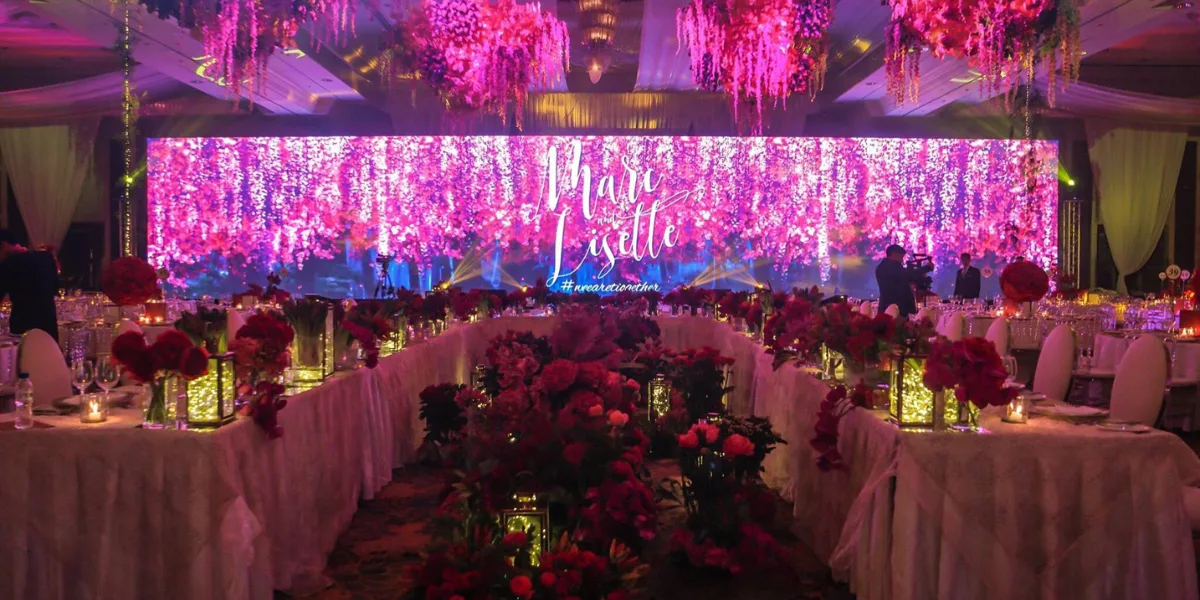
Awards ceremonies and gala events use LED walls for brand presence, program content, nominee presentations, and atmospheric visual effects that create energy and excitement. The dynamic nature of LED content—video, animation, graphics—provides production value exceeding what static scenic elements or projection achieve.
Trade show exhibits incorporate LED walls attracting attention in crowded convention halls where visual impact determines whether attendees stop or pass by. Bright, dynamic content visible from across exhibit floors draws traffic while communicating brand messages and product benefits before prospects even reach booths.
Outdoor events and festivals deploy weather-resistant LED systems delivering visibility in direct sunlight where projection proves completely ineffective. Concerts, sporting events, and public gatherings rely on LED screens ensuring all attendees see content regardless of distance from stages or competition from ambient light.
Technical Considerations and Planning
Successful LED wall implementation requires careful planning addressing technical specifications, content optimization, and logistical factors affecting performance and visual impact.
Pixel pitch selection determines viewing distance appropriateness and image quality. Fine pitch displays (1.5mm-3mm pixel spacing) suit close viewing applications where audiences sit near screens, while wider pitch panels (4mm-6mm) prove cost-effective for large venues where viewing distances exceed several meters. Matching pixel pitch to typical viewing distances optimizes both image quality and budget efficiency.
Resolution planning ensures content displays at appropriate clarity without wasting resolution on applications where audiences cannot perceive additional detail. A 10-meter wide display at 3mm pixel pitch delivers specific native resolution—content should be produced matching this resolution rather than assuming higher is always better regardless of viewing context.
Brightness calibration balances visibility with audience comfort, avoiding excessive brightness that causes eye strain in indoor environments while ensuring adequate output for bright venues or outdoor applications. Professional providers adjust brightness appropriate to ambient conditions rather than simply maximizing output regardless of context.
Content optimization for LED displays differs from creating presentation slides or projection content. Understanding LED characteristics—resolution, aspect ratio, viewing distance—informs content design that leverages these displays’ strengths rather than treating them as simple projection replacements.
Integration with Broader Production Elements
LED walls function as components within comprehensive event production ecosystems, integrating with lighting, audio, staging, and control systems creating cohesive experiences.
Signal routing and switching infrastructure connects multiple content sources—presentation computers, video playback systems, camera feeds—to LED processors managing display output. Seamless transitions between sources and content types require professional signal management that prevents the blank screens, resolution mismatches, or delayed switches that undermine professional production.
Camera integration for live video magnification combines LED displays with camera systems capturing speakers, performers, or demonstrations for audiences unable to see presenters directly. This integration—common at large conferences and concerts—requires careful color management and refresh rate matching, preventing the flicker or banding that occurs when camera and display technologies conflict.
Lighting design coordination ensures stage and environmental lighting complements rather than interferes with LED content visibility. Backlighting LED walls creates a distracting spill that reduces perceived contrast, while inadequate front lighting causes presenters to disappear against bright backgrounds. Professional production teams balance these elements creating unified visual experiences.
Professional Setup and Technical Support
LED wall installation requires expertise ensuring structural stability, electrical safety, and optimal positioning maximizing visual impact while maintaining audience safety.
Rigging and structural considerations address weight distribution, mounting methods, and safety factors preventing catastrophic failures. Large LED installations weigh thousands of kilograms—proper engineering ensures venue structures can support loads while redundant safety systems protect audiences from potential equipment failures.
Power distribution planning prevents circuit overloads while ensuring clean power delivery that prevents artifacts or failures during events. LED walls consume significant electricity, requiring careful load calculation and often dedicated distribution addressing both capacity and reliability.
Calibration and color management across all panels ensures uniform appearance without visible brightness or color variations between modules. Factory calibration provides starting points, but field adjustment accounting for ambient conditions and content characteristics optimizes final appearance.
On-site technical support throughout events ensures immediate response to any issues while managing content playback, source switching, and coordination with presenters. Even perfectly installed systems benefit from experienced operators monitoring performance and executing seamless transitions between program elements.
Working with Professional AV Providers
Selecting appropriate LED wall suppliers requires evaluating equipment quality, technical expertise, and support capabilities beyond simple pricing comparison.
Equipment quality varies significantly between premium panels maintaining consistent performance and budget alternatives exhibiting brightness variations, dead pixels, or color inconsistencies. Professional audio visual companies invest in quality inventory understanding that equipment reliability directly impacts client satisfaction and company reputation.
Technical consultation during planning phases ensures appropriate system specifications for specific events rather than defaulting to generic solutions. Providers like NextGen offer expertise matching LED technology to event requirements, venues, and budgets rather than pursuing one-size-fits-all approaches that over-engineer some applications while under-serving others.
Comprehensive service packages including delivery, installation, operation, and strike reduce client burden while ensuring professional execution throughout event lifecycles. These turnkey solutions prove particularly valuable for organizations lacking in-house technical expertise or those preferring to focus on content and programming rather than managing technical logistics.
LED video walls represent transformative technology elevating event experiences through visual impact, flexibility, and reliability that traditional display methods cannot match. Organizations embracing these solutions create memorable brand experiences that command attention and communicate messages with clarity and impact that audiences remember long after events conclude.