There is a growing gap between what audiences expect and what most environments deliver. Websites that simply function feel forgettable. Events that only inform fade within days. Spaces that exist purely for practical purposes leave no lasting impression. Into this gap has emerged a concept that is reshaping how designers, marketers, educators, and architects think about human experience. Spaietacle is that concept. It is not a product, a platform, or a piece of software.
It is a design philosophy built around the idea that spaces, whether physical or digital, should not just work. They should be felt. This guide covers everything about spaietacle clearly and completely, from its etymology and core principles to its real-world applications, its challenges, and why it is becoming one of the most relevant ideas in modern experience design.
What Is Spaietacle?
Spaietacle is a modern concept born from two older words: space and spectacle. More specifically, it draws from the Latin roots spatium, meaning space or place, and spectaculum, meaning a show or display. Blend them together and you get something far more powerful than either word alone. A spaietacle is a designed, intentional experience where the physical or digital environment stops being just a backdrop and becomes the experience itself.
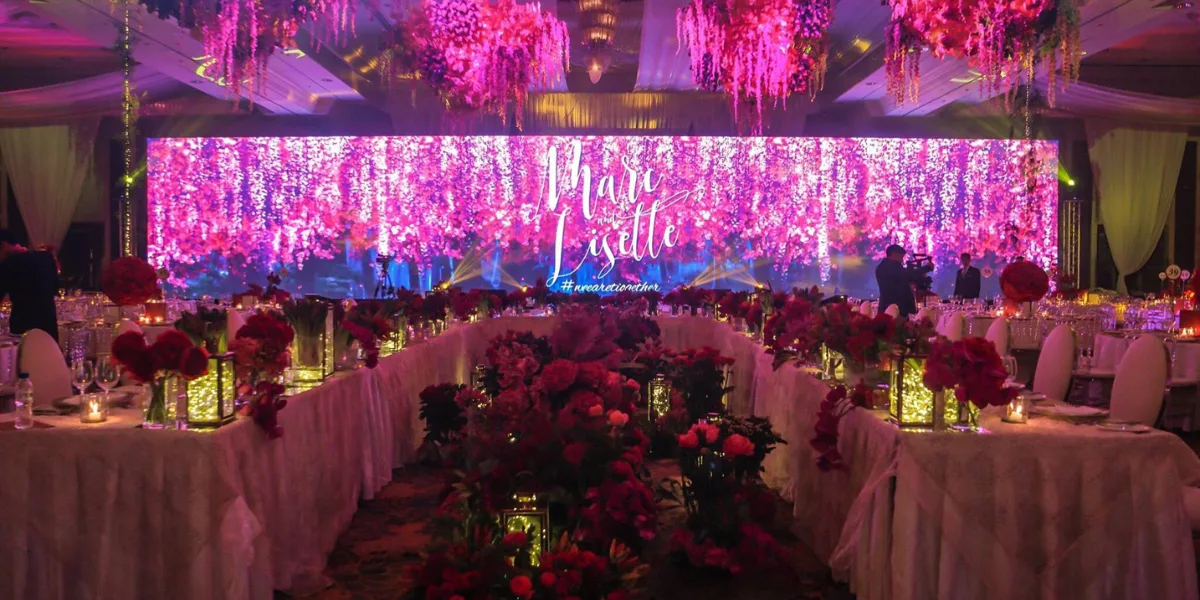
The clearest way to understand spaietacle is through contrast. A regular spectacle is something you sit down and watch, a fireworks show, a concert, a film. You are the audience, separated from the action. A spaietacle pulls you inside. You move through it. You feel it. The walls, the light, the sound, the layout, all of it tells a story that you experience with your whole body, not just your eyes. This shift from passive viewing to active participation is the central idea behind every discussion of spaietacle in contemporary design, marketing, and technology.
In terms of experiential design, spaietacle sits at the intersection of architecture, sensory psychology, storytelling, and technology. It is the design philosophy built for exactly this moment in history: when people are tired of content that scrolls past, overwhelmed by information that does not stick, and hungry for something that genuinely engages them at a human level.
The Origins and Etymology of Spaietacle
Spaietacle is a neologism, a newly coined word, that reflects a genuine shift in how designers and communicators think about their work. It is not yet found in major dictionaries, which actually tells you something important about it. The concept is fresh enough to be evolving, which means different writers and practitioners define it with slightly different emphases, but the core idea stays consistent across all uses.
The word traces its linguistic roots to Latin: spatium for space and spectaculum for spectacle. The combination captures something neither word achieves alone. Spectacle implies something impressive but external, something observed from a safe distance. Space implies an environment but not necessarily a meaningful one. Spaietacle insists that the environment itself must become the experience. The boundary between the observer and the observed dissolves. The space is not where the spectacle happens. Space is a spectacle.
This linguistic precision matters because it reflects a real design philosophy. Designers who work within the spaietacle framework are not asking what to show people. They are asking what people should feel, and then designing the entire environment to produce that feeling consistently and memorably.
The Four Core Elements of Spaietacle
Every spaietacle, regardless of the medium or context, is built on four foundational elements working together.
Spatial Design and Environmental Storytelling. The physical or digital layout of the experience is not neutral. Every element of the environment is intentional. Pathways guide movement. Zones create different emotional registers. Transitions between areas mark meaningful shifts in the story being told. A retail spaietacle might guide shoppers through different zones, each telling a part of the product’s story. A museum spaietacle might use corridor width and ceiling height to create anticipation before a major reveal. The space itself narrates.
Multi-Sensory Engagement. A truly effective spaietacle engages multiple senses simultaneously. This includes visual elements like dynamic lighting and projections, auditory components such as spatialised sound design, tactile feedback through surfaces and textures, and even scent, which research consistently identifies as the sense most directly connected to emotional memory. This complete sensory approach deepens immersion and improves recall. Information encountered through multiple sensory channels simultaneously is retained far more effectively than information presented through a single channel.
Interactivity and Participation. Interactivity is often the defining feature that distinguishes spaietacle from conventional display or performance. This can range from simple touch screens and motion sensors to complex AI-driven systems that adapt the experience based on individual audience behaviour. The participant is not a passive consumer. They are a co-author of the experience, and the environment responds to them in meaningful ways. This responsiveness creates a sense of genuine agency that transforms how the experience is emotionally received.
Narrative Coherence. All of the above elements must serve a clear story. Without narrative coherence, spaietacle becomes overwhelming rather than immersive. The most successful examples share a common quality: every design decision, from colour palette to sound level to the placement of a doorway, serves the larger story being told. When everything is in service of the narrative, the experience feels unified and meaningful rather than chaotic and stimulating for its own sake.
Read also: Eid ul Adha 2026 Ready to Wear Dresses by NAQSHI – From Day Comfort to Evening Elegance
Real-World Applications of Spaietacle
Spaietacle is not a theoretical concept confined to design journals. It is actively shaping how organisations across multiple industries engage their audiences.
Art and Entertainment. In the world of art and entertainment, spaietacle experiences have redefined what a museum visit or a concert can be. Rather than walking past framed paintings on white walls, visitors at certain immersive exhibitions find themselves inside the artwork, surrounded by projected images that move and respond to their presence, with music that shifts as they move through different zones. Theme parks have adopted spaietacle principles to transform rides into complete narrative journeys where the queue area, the ride vehicle, and the exit experience all form a single coherent story.
Retail and Brand Marketing. Brands are increasingly using spaietacle to create memorable in-store experiences, product launches, and pop-up events. A car manufacturer might create a spaietacle that simulates a driving experience through different terrains, highlighting a vehicle’s capabilities without the customer ever leaving the showroom. Fashion retailers use augmented reality applications that allow customers to interact with clothing in ways that feel personal and engaging. According to industry research, $164 billion was spent globally on experiential marketing in 2026, with effectiveness consistently tied to the depth of audience engagement rather than the scale of the investment.
Education and Training. Spaietacle has significant applications in education, where the challenge of sustaining attention and improving retention is constant. Medical training programmes that simulate operating theatre environments, history curricula that use immersive reconstructions of historical events, and corporate training environments that use spatial storytelling to embed values and procedures all draw on spaietacle principles. The psychological basis is well established: information encountered while moving through a designed space, making decisions, and feeling genuine emotion is retained at significantly higher rates than information encountered passively.
Healthcare and Wellbeing. Hospitals, therapy centres, and wellness spaces are adopting spaietacle principles to reduce patient anxiety, improve healing environments, and create spaces that support rather than undermine emotional wellbeing. Lighting that shifts with the time of day, sound environments that reduce stress rather than add to it, and spatial layouts that create calm rather than clinical distance all reflect the influence of spaietacle thinking on healthcare design.
Spaietacle vs Traditional Experience Design
| Feature | Spaietacle | Traditional Design |
| Audience Role | Active participant | Passive observer |
| Sensory Engagement | Multi-sensory, simultaneous | Primarily visual |
| Environment | Co-author of experience | Backdrop |
| Memory Retention | High, emotionally anchored | Lower, stimulus-dependent |
| Narrative | Central to all design decisions | Optional addition |
| Technology Role | Adaptive, responsive, integrated | Supplementary |
| Goal | To be felt and remembered | To be seen and understood |
| Application Range | Physical, digital, hybrid | Usually single medium |
Common Mistakes When Implementing Spaietacle
Understanding what spaietacle is also means understanding what it is not. Several common mistakes undermine the effectiveness of spaietacle experiences in practice.
Prioritising spectacle over substance. Too many visuals can overwhelm users rather than engage them. Visual appeal should never replace valuable information or meaningful narrative. A spaietacle that dazzles without delivering anything meaningful is forgettable in a different way than a plain environment, but it is still forgettable.
Neglecting coherence. Mixed signals confuse the audience and weaken impact. Without a clear purpose and a unified narrative, spaietacle becomes a collection of impressive elements rather than a meaningful experience. Every design decision must serve the story.
Underestimating accessibility. A spaietacle that works brilliantly for one type of user but excludes others due to sensory overload, physical barriers, or technological requirements is a failure of design rather than a success of experience. Inclusive design and spaietacle principles are not in conflict. They strengthen each other.
Treating technology as the point. Technology is a tool within the spaietacle framework, not its purpose. The most powerful spaietacle experiences use technology invisibly, in service of the human experience, rather than foregrounding the technology itself as the attraction.
The Future of Spaietacle
Spaietacle is still a fresh, evolving concept, and the most significant developments in its application are still emerging. Several technological and cultural trends are accelerating its relevance.
Advances in artificial intelligence are enabling environments that adapt in real time to individual user behaviour, creating genuinely personalised spatial experiences at scale. Virtual and augmented reality are extending spaietacle principles into entirely digital environments that retain the sensory and participatory qualities of physical space. The growing mainstream awareness of how physical environments affect mental health is driving demand for spaietacle-informed design in public buildings, workplaces, and residential architecture.
Most significantly, the cultural shift driving interest in spaietacle is not going to reverse. People are exhausted by passive consumption and hungry for genuine engagement. Audiences are not just asking for better content. They are asking to feel something. Spaietacle is the design response to that hunger.
Read also: LED Wall Hire for Events: Transforming Engagement with High-Impact Visual Displays
Conclusion
Spaietacle is more than a new term for an old idea. It is a precise and necessary concept for a moment when the gap between information and experience has never felt wider or more consequential. It describes the design philosophy that moves environments, spaces, brands, events, and digital products from the category of things that are seen into the category of things that are genuinely felt and remembered.
The word is new. The need it names is ancient. And in 2026, with attention spans stretched thin and the demand for meaningful experience at an all-time high, spaietacle is not simply an interesting design concept. It is rapidly becoming an essential one.
Frequently Asked Questions
What does spaietacle mean?
Spaietacle is a modern concept combining the Latin roots spatium (space) and spectaculum (spectacle), describing an intentional design approach where a physical or digital environment becomes an immersive, multi-sensory, participatory experience rather than a passive backdrop.
Is spaietacle a real word?
Spaietacle is a neologism, meaning it is a newly coined term not yet found in major dictionaries. However, it represents a genuine and growing design philosophy with clear, consistent meaning across its various uses in design, marketing, and technology writing.
Where is spaietacle used?
Spaietacle principles are applied across art, entertainment, retail, brand marketing, education, healthcare, and digital product design, wherever creating a meaningful, immersive, and memorable human experience is the goal.
How is spaietacle different from a spectacle?
A spectacle is observed from a distance. A spaietacle surrounds the participant, making them an active co-author of the experience through multi-sensory engagement, spatial design, interactivity, and narrative coherence.
Read also: From Problem Solving to Process Excellence with Root Cause Analysis and IMS