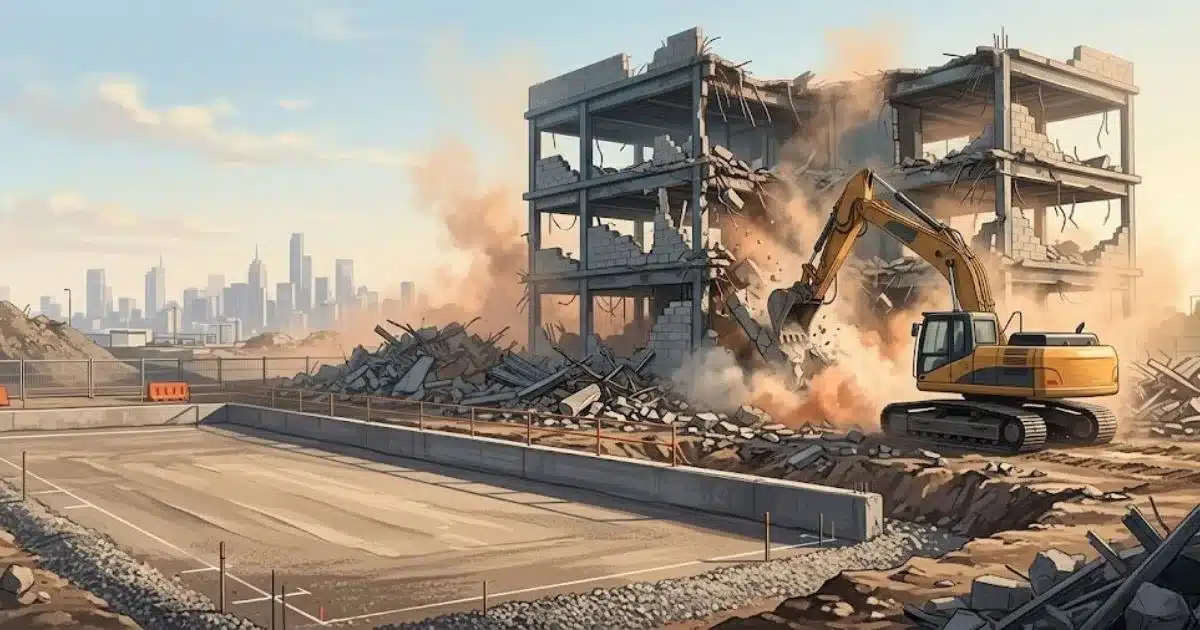
Most people think of construction as the exciting part, the framing, the finishes, the moment a space starts taking shape. But every successful build depends entirely on what happens before a single new wall goes up. The teardown phase is where projects are either set up for a smooth run or quietly sabotaged by decisions that seemed harmless at the time.
Getting demolition right is not about brute force. It is about planning, expertise, and understanding that what you remove is just as important as what you build.
The Part of Construction That People Underestimate Most
Walk through any major renovation or new construction project and you will find the same pattern. Owners spend months agonizing over floor plans, materials, and finishes. Then, when it comes to actually clearing the existing structure, they treat it as an afterthought, something to get through quickly before the real work begins.
This is where costly mistakes happen.
Old structures hold surprises that are not visible from the outside. Asbestos in insulation materials. Outdated electrical wiring running through walls that look perfectly ordinary. Plumbing that does not appear on any original blueprint. Load-bearing elements that are not obvious until something shifts unexpectedly.
None of these problems are impossible to manage. But they all require someone who knows how to identify and handle them before the wrecking begins, not after.
What Professional Demolition Actually Involves
There is a common image of demolition that involves heavy equipment swinging without much thought or direction. Real demolition work looks very different.
Structural Assessment Before Anything Is Touched
Before a crew lifts a single tool, a proper assessment maps out exactly what is there. Which walls carry load? Where are the utility lines? Are there materials that require special handling or disposal protocols? What are the structural dependencies between different sections of the building?
This assessment drives the entire demolition plan. It determines the sequence in which sections come down, which equipment is appropriate for each stage, and where extra caution is needed to protect adjacent structures or the existing foundation.
Section-by-Section Dismantling
Large-scale removal is rarely done all at once. Controlled, sequential dismantling gives crews the ability to manage debris, monitor structural behavior as sections come down, and respond quickly if something unexpected appears.
This approach is especially important in residential neighborhoods or commercial areas where neighboring properties are close. Uncontrolled collapses send debris outward unpredictably and create serious risks for people and structures nearby. Sequential teardown keeps everything contained and manageable.
Hazardous Material Handling
Older buildings frequently contain materials that require specialized removal procedures. Asbestos, lead paint, and certain chemical residues cannot simply be broken apart and loaded into a truck. They need to be identified, contained, and disposed of according to specific regulatory requirements.
Handling this incorrectly does not just create legal liability, it creates genuine health risks for workers, neighbors, and future occupants of the site.
Read also: Elizabeth Huberdeau Revealed: The Complete Story of John Cena’s First Wife
Why the Right Team Changes Everything
Hiring a qualified Demolition Contractor is one of the most direct ways to protect both your budget and your timeline on any construction project. Here is why it matters at each stage.
Permits and Regulatory Compliance
Demolition work requires permits in most jurisdictions, and those permits come with conditions. Work hours, noise limits, dust control requirements, debris disposal specifications, all of these vary by location and property type. An experienced team knows how to navigate this paperwork efficiently and ensures the work stays within what local authorities require.
Attempting to handle permits without experience often leads to delays, rejected applications, or stop-work orders that freeze progress at the worst possible time.
Equipment That Matches the Job
Different demolition scenarios require different tools. Interior soft-strip work calls for hand tools and careful manual removal. Structural demolition of concrete buildings needs hydraulic shears and excavators with specialized attachments. Selective demolition, where specific elements are removed while others are preserved, demands precision equipment and skilled operators.
Using the wrong equipment for a given situation either damages what should be kept or leaves behind material that should have been removed.
Debris Management From Day One
A demolition site generates an enormous volume of material very quickly. Without a clear plan for managing that debris, it piles up, creates hazards, and slows the entire process. Efficient crews load debris continuously as they work, keeping the site clear and maintaining safe movement for everyone on the job.
Good debris management also means sorting materials appropriately. Concrete, metal, timber, and drywall each have different disposal and recycling pathways. Diverting recyclable materials from landfill is both environmentally responsible and, in some cases, reduces overall disposal costs.
Residential vs. Commercial — Why the Approach Differs
The fundamentals of safe demolition apply everywhere, but the context shapes how work gets done.
Residential demolition often happens in dense neighborhoods where noise, dust, and disruption affect families on either side of the property line. Timing, containment, and communication with neighbors all become part of the job. The scale is typically smaller, but the sensitivity to the surrounding environment is higher.
Commercial demolition tends to involve larger structures, tighter contractual deadlines, and more complex coordination with other trades. The teardown phase needs to stay precisely aligned with the broader construction schedule so that foundation crews and builders can move in on schedule. Any delay in clearing the site ripples through every subsequent phase of the project.
Both environments reward preparation and penalize shortcuts.
The Standard Your Site Should Meet Before Construction Begins
When demolition is done properly, the handoff to the construction team is clean. The site is level. Debris is gone. No hidden material is waiting to cause a problem two months into the build. The foundation contractors arrive at a site that is genuinely ready for them, not one that still needs hours of cleanup before real work can begin.
This standard is not always what property owners receive, particularly when they hire on price alone or attempt to self-manage the teardown with less experienced crews. The savings realized upfront often disappear in schedule delays, rework costs, and complications that a more thorough initial job would have prevented entirely.
Starting Right Makes Everything That Follows Easier
The decisions made at the very beginning of a construction project, including who handles the demolition and how it is managed, shape everything that comes after. A clean, well-executed teardown shortens the overall project timeline, reduces the likelihood of budget surprises, and gives the building team a proper foundation to work from.
If you are planning a renovation, a rebuild, or a new construction project that requires clearing an existing structure, the demolition phase deserves the same level of attention you give to everything else. Cutting corners at the start is the most reliable way to create problems you will spend the rest of the project working around.
Read also: United Airlines Flight UA770 Emergency Diversion: The Complete Story Explained